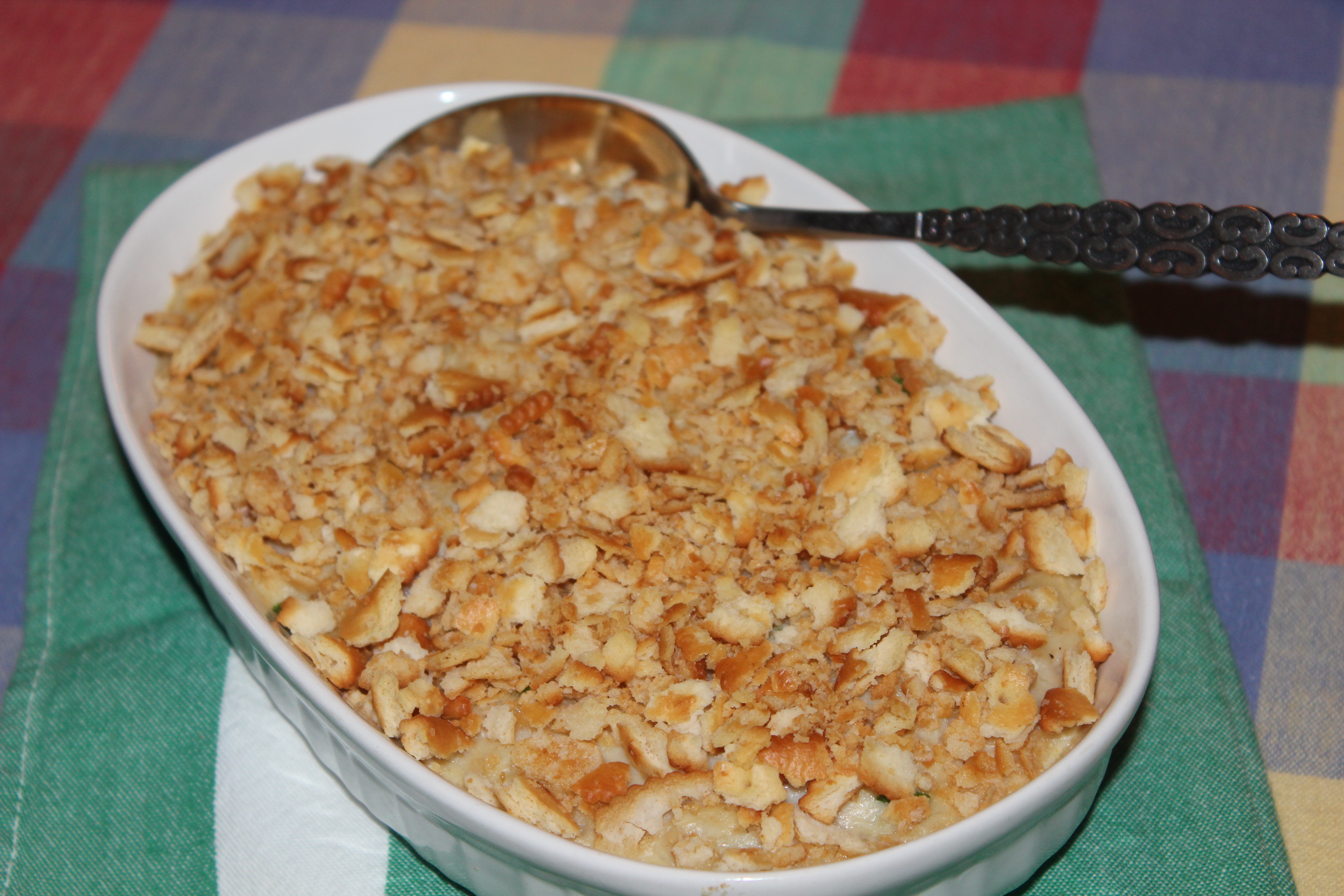
This Old Table

Antique Baker’s Table

This old table is an antique baker’s table.  I imagine it once stood in a farmhouse kitchen where the lady of the house used it exactly as intended as the center of her baking activities.  I found it several years ago at an antique show, and since my kitchen at the time lacked a center island,  I purchased it to serve that purpose.

Now it stands in the center of my kitchen where it gets constant use as a way-station for things that are coming or going.  Its where I unpack groceries to put away, deposit foods removed from the refrigerator, place hot foods just removed from the oven, pack up Mr. D’s lunch ready for him to carry off to work, etc.   But I am also proud to say that I use it also for its intended purpose as the center for my baking.

I love and particularly treasure things that are old, and I have a number of antiques.  Especially dear to me are the items that have been in my family for 2-3 generations, because I can associate them with the people who used them. Like my cast-iron frying pans and bean pot that belonged to my paternal grandmother.  When I use them I think of her home fries and her baked beans.  Likewise when I roll out pastry or cookie dough I use a wooden rolling pin that was once used by my maternal grandmother and I remember her wonderful breads and pastries.

Let me take you on a tour of my baking table/baking center. The table is made from cherry wood except for the top.  I don’t know what the wood of the top is, but it has had a lot of use and it shows.  It was, after all, a work surface.  Viewed from the front (see photo above) you will see two drawers with handles.  The upper one is quite shallow, and in it I keep a roll of parchment paper, cookie cutters, tubes of food coloring, muffin cups, bench knife, pizza cutter, anything small related to baking that will fit.

Side view showing large storage bins for dry goods.

The lower drawer is very large, deep and rounded, with a division in the center that creates two bins.  It was meant to hold flour and sugar in large quantities.
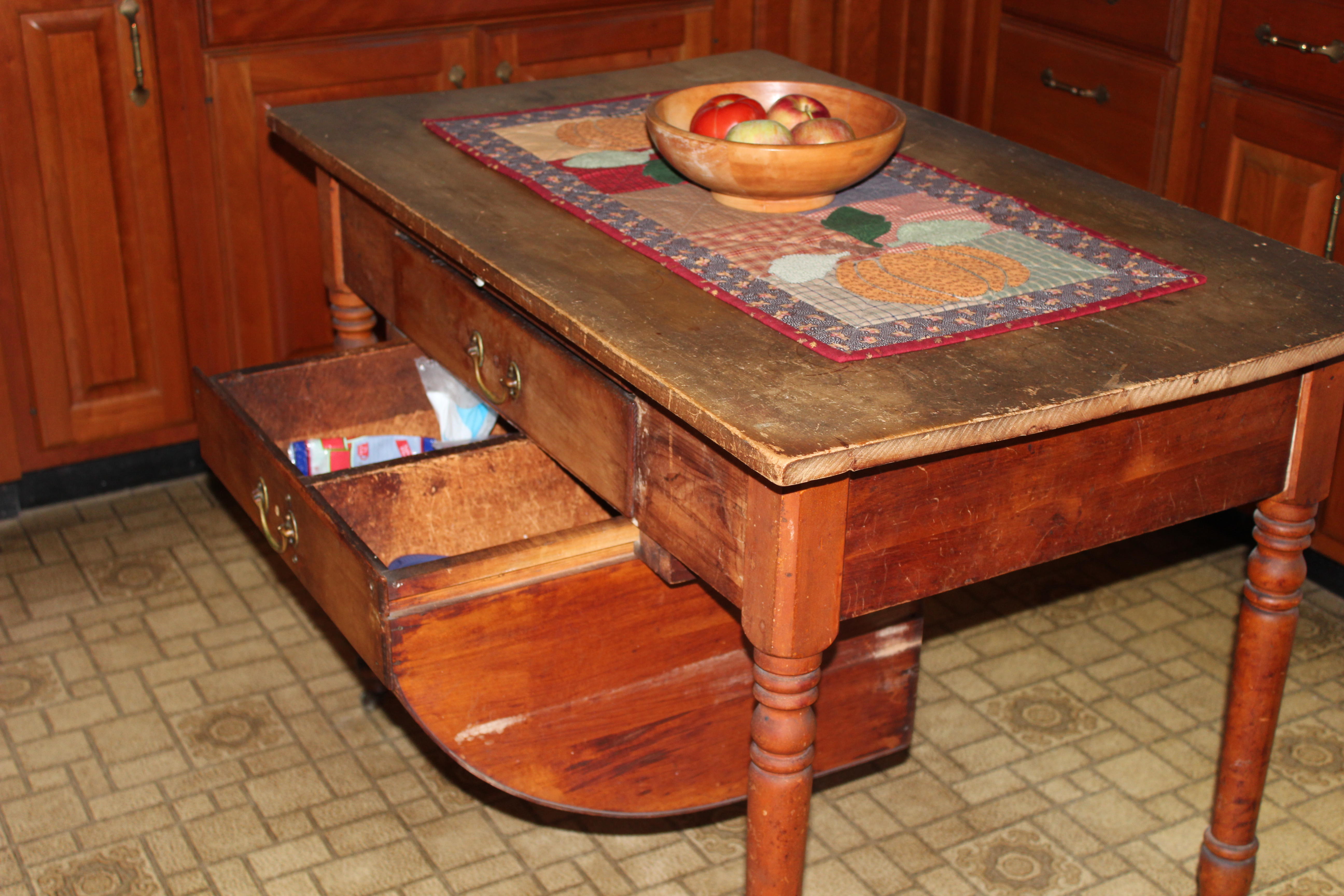
Lower drawer open to show the divider in the center creating two bins

As these ingredients were needed, the baker scooped out the required amounts.  I use those bins for storage of bags of specialty flours, brown sugar, confectionery sugar, chocolate and other kinds of chips; and also larger baking tools like my rolling pin, sifter, nut grinder, grater, etc.
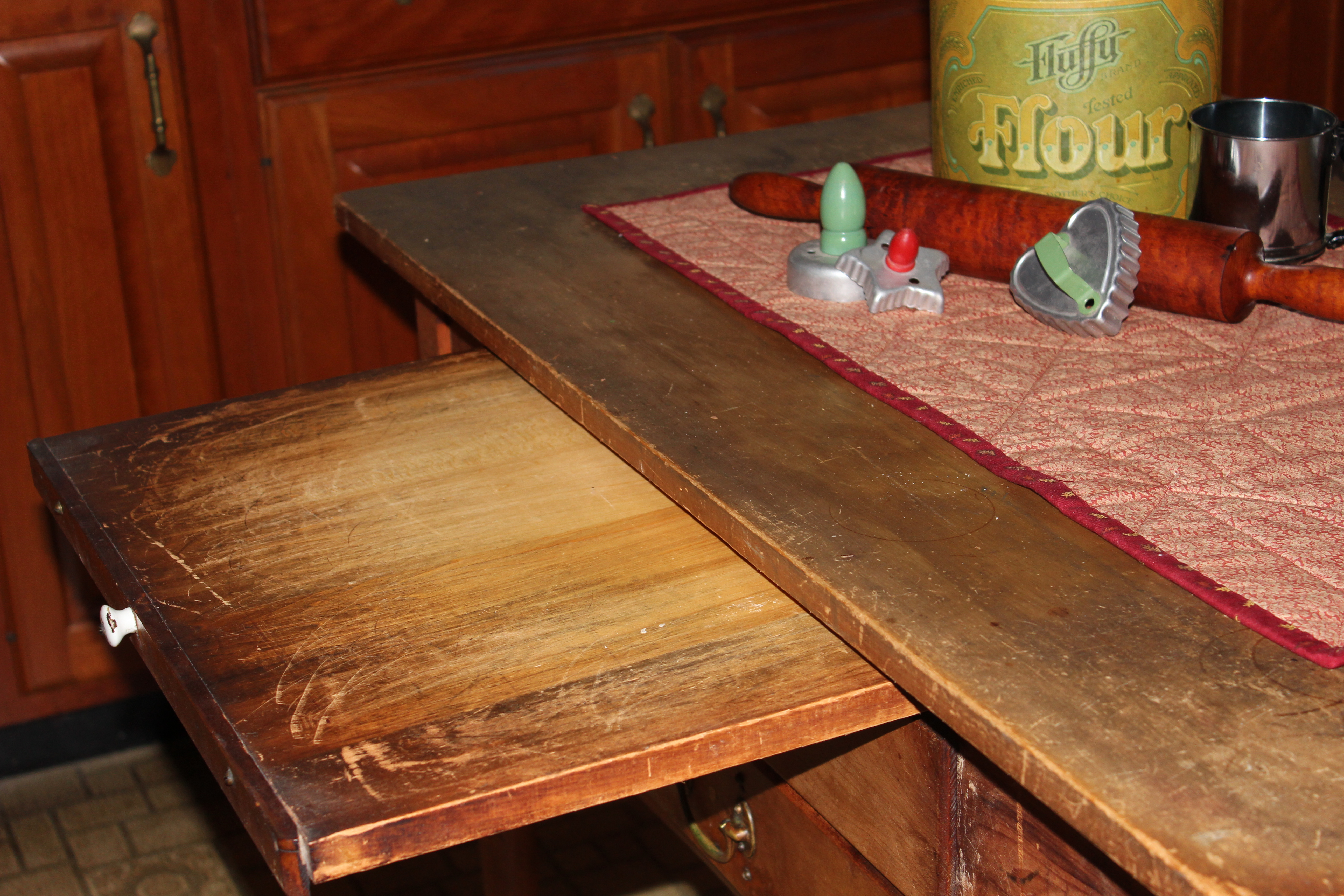
Removable pastry board.

Centered above the two drawers is a pull-out pastry board  (note small white knob) that comes completely out of the table and can be placed on top for kneading, rolling, and cutting dough.  I use this board a lot for all my pie making, cookie cutting, shaping of dough, just about anything where I need a large surface.  It is as smooth as satin from all the use it has had;  that’s why I love it.
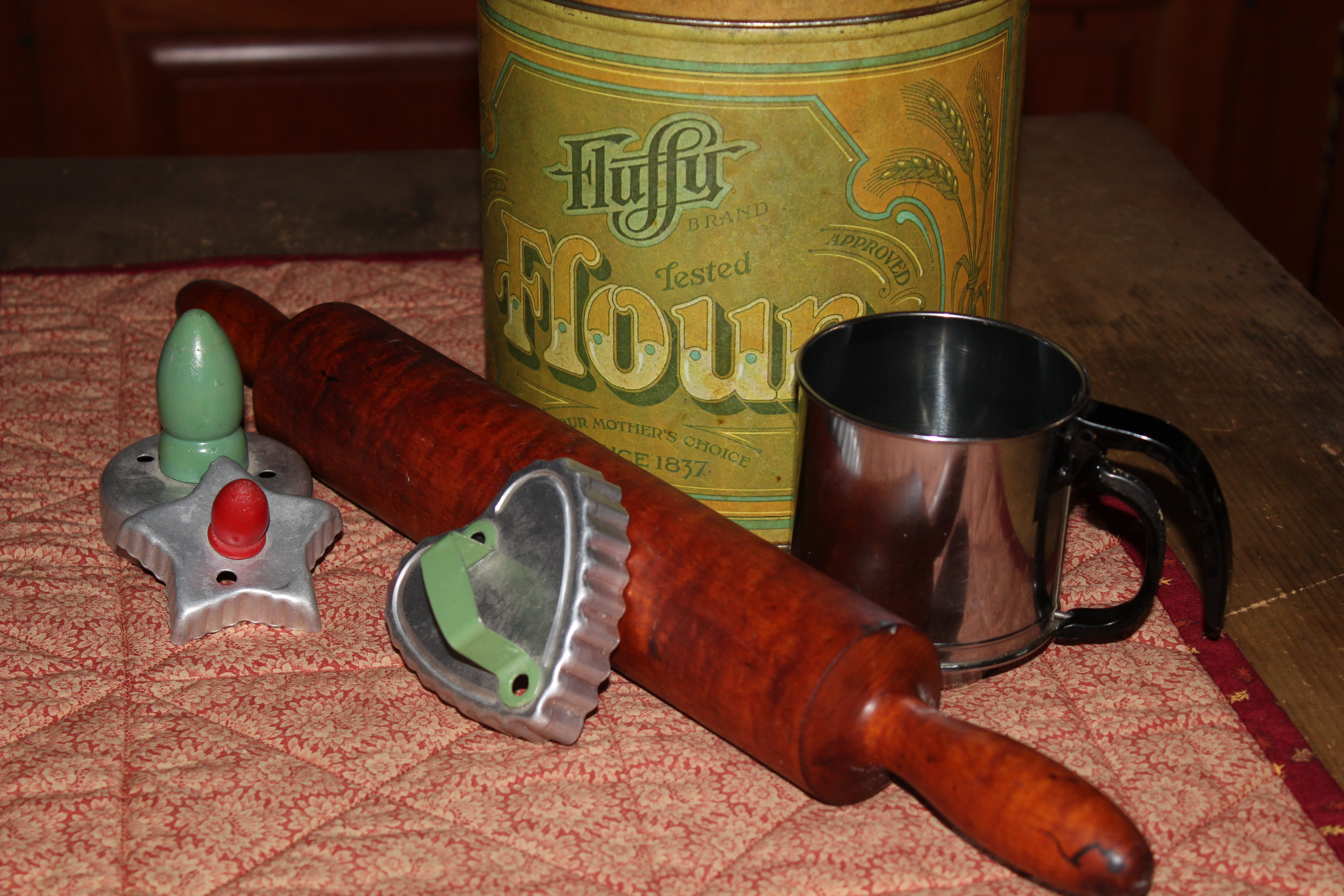
Antique rolling pin, canister, cookie cutters and sifter.

In this final picture you can see my beloved rolling pin.  It was carved from one piece of wood, I think it’s maple, and it, too, is very smooth;  the wood grain of it is beautiful.  Along with it is pictured one of two old canisters I own and some vintage cookie cutters that belonged to my mother.    I love these old things and when I use them I feel a connection to the people who used them before me.

It has been my pleasure to give you a look into my kitchen, which holds so many things that are special to me.  I hope you have enjoyed it.
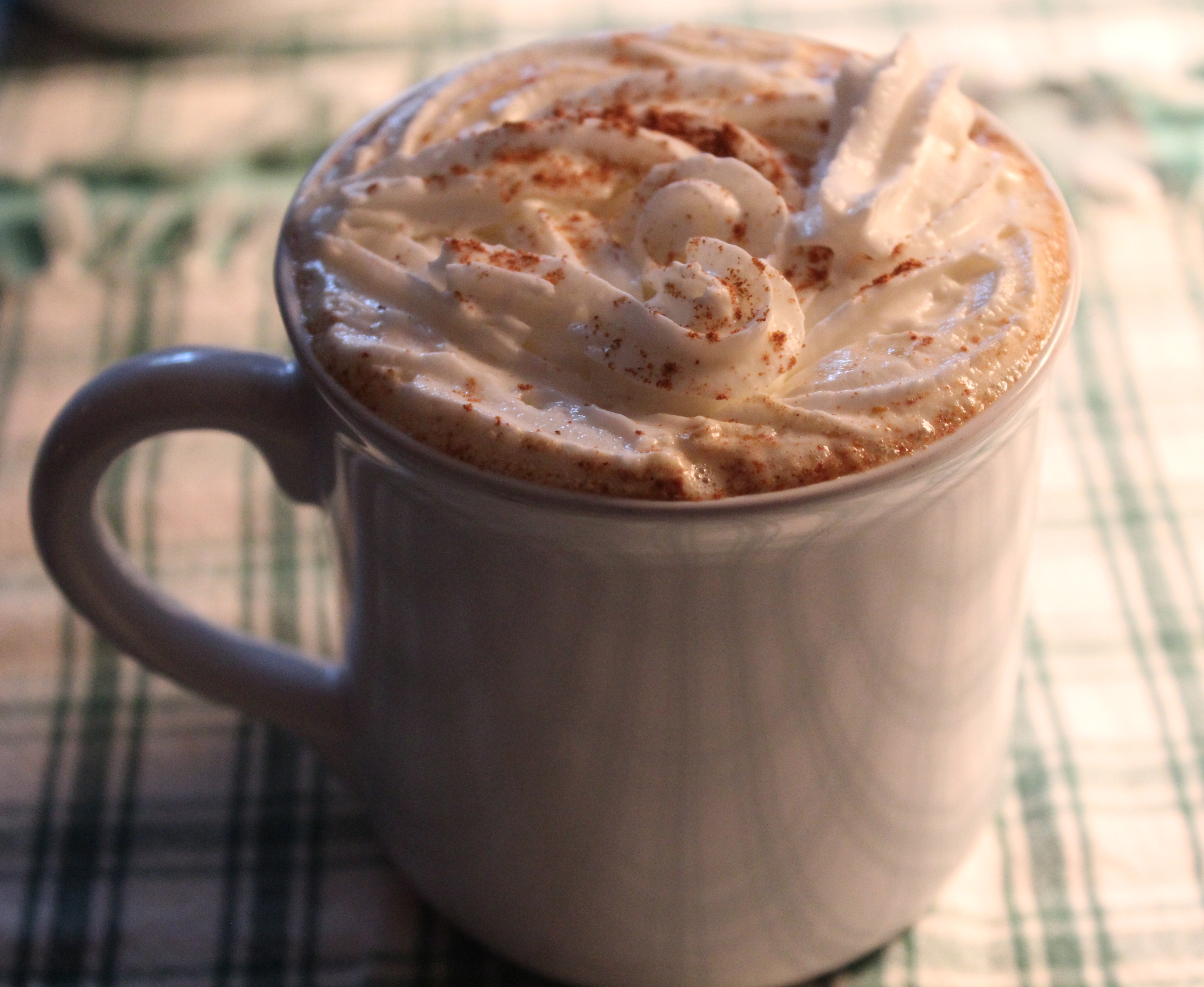
Pumpkin Spice Latte

Pumpkin Spice Latte

Are you a Starbucks person?  Is that your first stop every morning for a grande, a latte, machiatto, or whatever?   Not me.  No, I prefer to brew my favorite blend at home.  However, at this time of year they feature a flavored coffee that I particularly like because it contains, you guessed it, pumpkin!

Pumpkin Spice Latte:  hot, spicy, so good;  but I’m concerned about the amount of sweetener in it, and after I’ve downed about half the cup, I begin to think it’s just too over-the-top spicy.  So to remedy the situation I experimented with making it at home and I think I’ve come up with an acceptable alternative.  In my version, the sugar is on a sliding scale, so you can adjust to your sweetness level, and although the flavors of pumpkin and spice are there, they are not overpowering.  With this recipe I can make a special cup whenever I want it, and not have to wait for it to be “in season”.

Another reason to like this recipe:  it uses up small amounts of pumpkin from another recipe. Don’t you just hate it when you’re left with a 1/4 cup of this or that?  Now what am I supposed to do with this?  In most cases it gets lost somewhere in the refrigerator, until the day comes when I find it and then MUST throw it out.  EEEEEUWH!     The pumpkin in this case was the perfect amount left over from when I made the Pumpkin Doughnuts.

PUMPKIN SPICE LATTE

YIELD:  2 servings

  • 2 cups milk, or half and half
  • 2 Tablespoons pumpkin puree
  • 1 – 3 Tablespoons sugar (to taste)
  • 1 teaspoon vanilla extract
  • 1/2 teaspoon pumpkin pie spice mix
  • 1 cup strong, hot coffee
  • whipped cream

1.  Into a medium saucepan put the milk, pumpkin and sugar.  Heat over medium heat until hot, but do not boil.

2.  Remove from heat and add vanilla, pumpkin spice and coffee.

3.  Pour into two large mugs, and garnish with whipped cream, and an extra pinch of pie spice.  Add a cinnamon stick if you wish.

This tastes like “the real thing”!

Pumpkin Spice Latte

SOURCE:  adapted from “Almost Real”,  the Food Network

Oatmeal Pear Scones

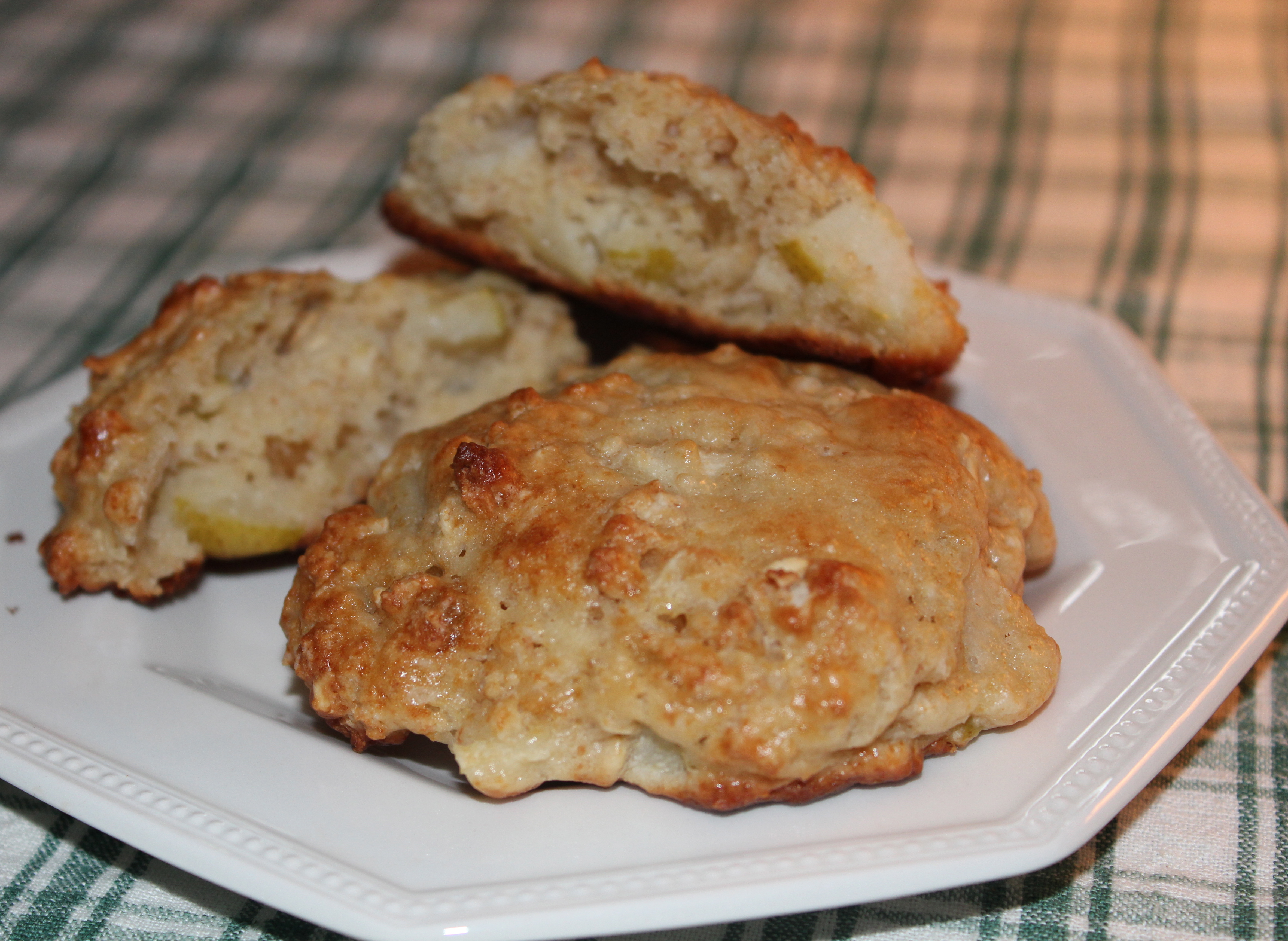
I went to the orchard recently to get some fresh apples and pears.  While there I noticed some recipes that were available using some of the products they were selling.  On looking through them I came upon this one for scones that included chopped fresh pears. Unusual, I thought, and worth trying out.  The recipe also called for ground ginger, but I knew immediately that I would put in some crystalized ginger, because pears need something with a little zing to enhance their flavor, and also just because I love candied ginger and use it whenever I can work it in. The recipes were free for the taking, so—I came home and soon began to bake these scones.  There is no rolling of dough or cutting involved.  They are simply dropped by the 1/4 cupful onto a baking sheet.  Quick. Easy.  Try them!

OATMEAL PEAR SCONES

YIELD:  Makes 10 dropped-style scones

INGREDIENTS:

  • 1 cup all-purpose flour
  • 1 cup old-fashioned oatmeal
  • 1/2 cup sugar
  • 1 1/2 teaspoons baking powder
  • 2 teaspoons ginger
  • 1 Tablespoon finely chopped crystalized ginger (optional, my addition)
  • 1/2 teaspoon baking soda
  • 1/4 teaspoon nutmeg
  • 1/4 teaspoon salt
  • 3 Tablespoons unsalted cold butter, cut into pieces
  • 3/4 cup plain yogurt
  • 1 egg, slightly beaten
  • 1 teaspoon vanilla
  • 3/4 cup unpeeled, finely chopped pear

1.  Preheat oven to 400 degrees.  Lightly grease a baking sheet or line with parchment paper.

2.  In a large bowl, combine all the dry ingredients, i.e. flour through salt.  Cut in butter with a pastry blender until mixture resembles coarse crumbs.

3.  In a small bowl, combine yogurt, egg and vanilla.  Add to dry ingredients all at once.  Mix until dry ingredients are moistened.  Gently stir in pear.

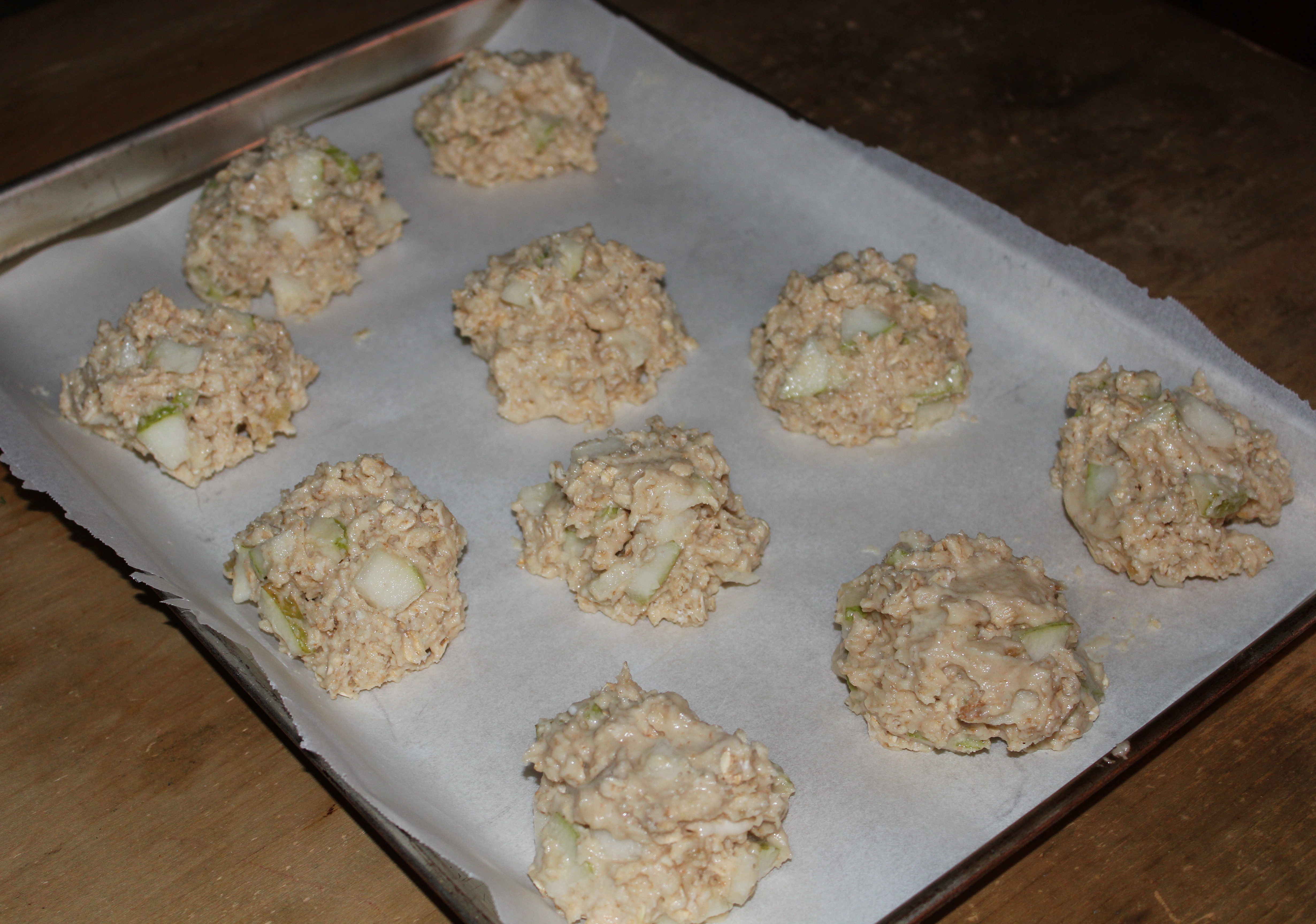
4.  Place  10  1/4 -cups of dough on the baking sheet, 2 inches apart.

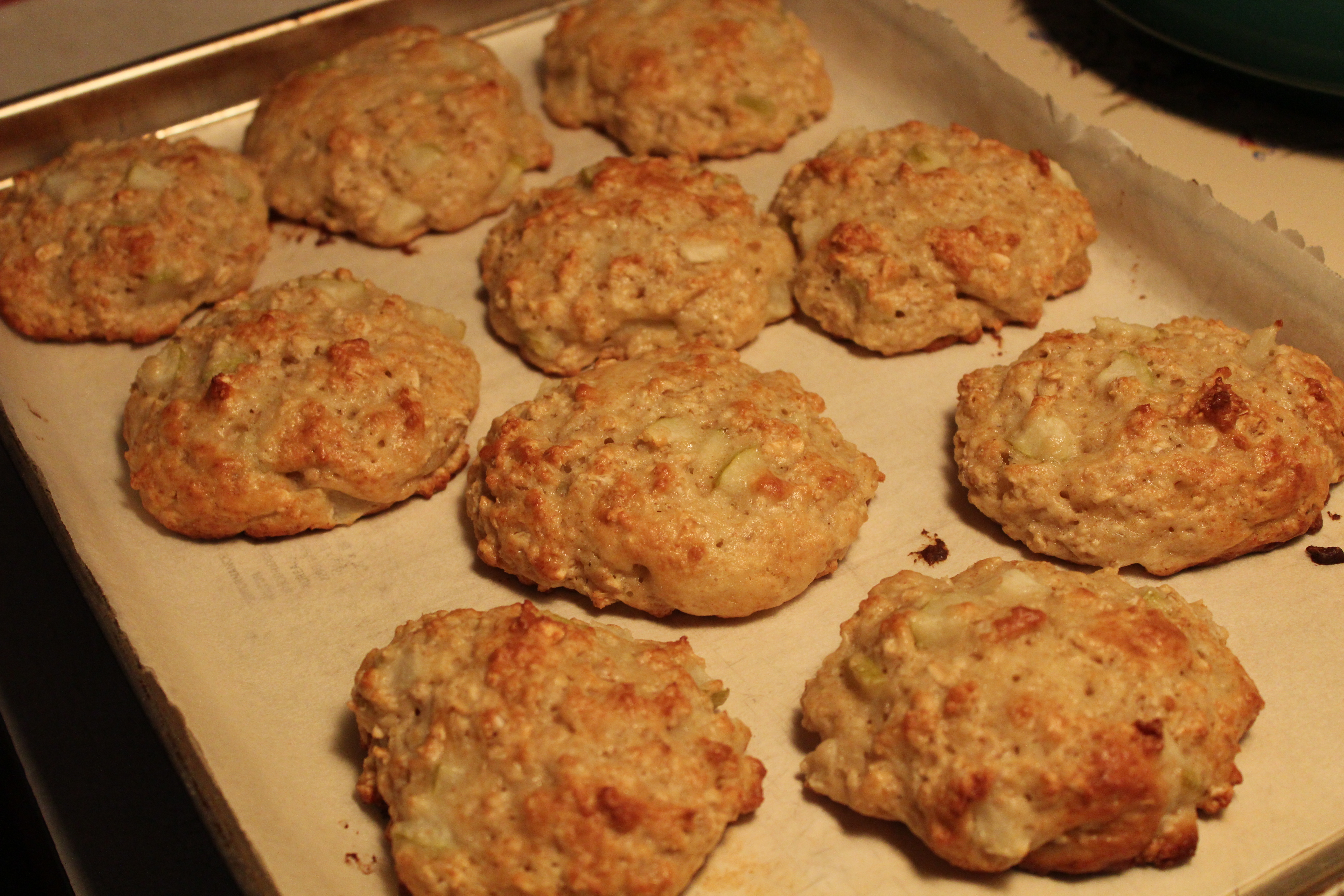
5.  Bake for 17 – 20 minutes or until golden brown.  Serve warm.

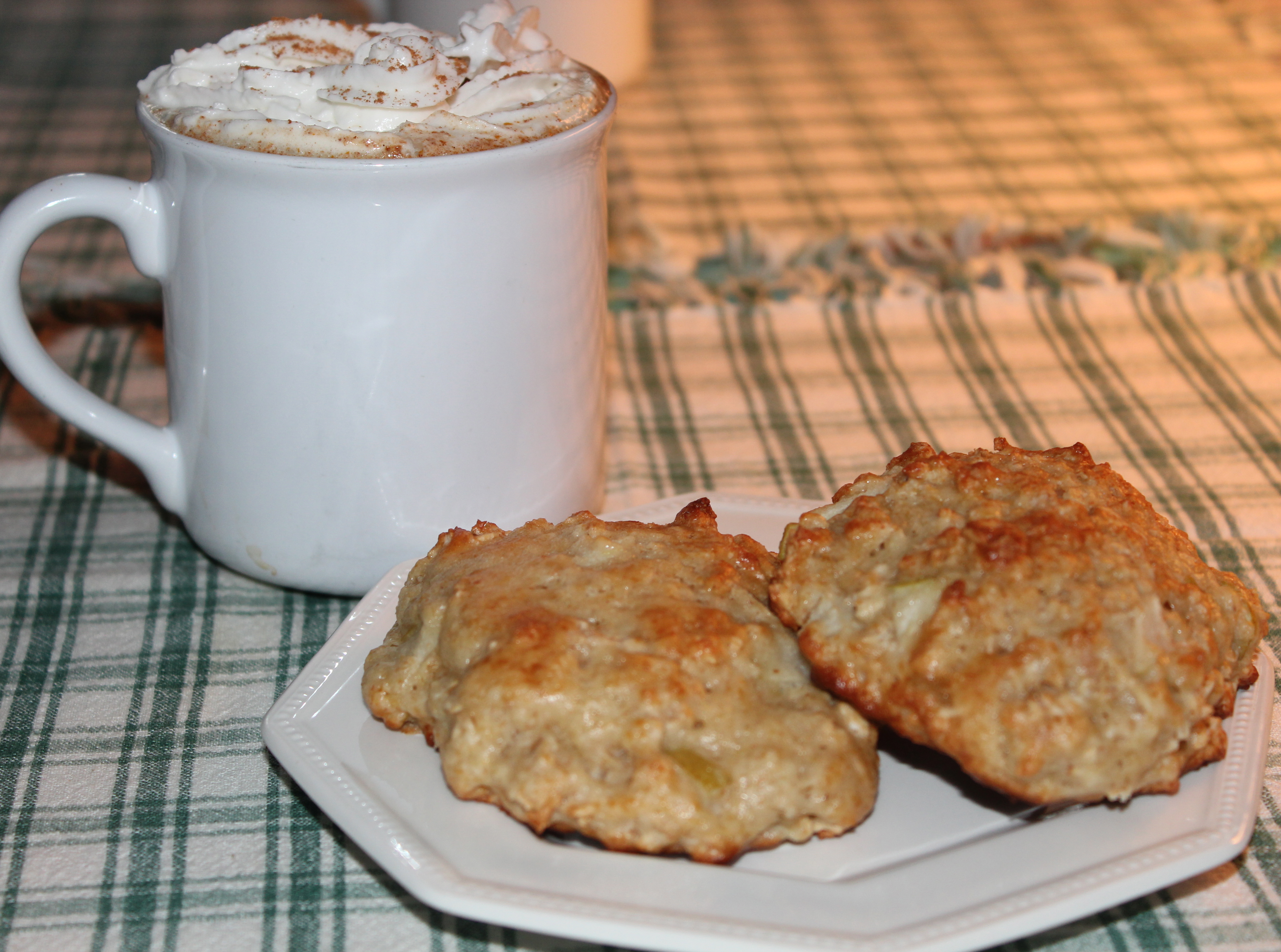
Adding the crystalized ginger worked out very well.  It added an occasional sharp little bite to a very nice, not too sweet accompaniment  to coffee.  I’m so glad to have found this recipe.  I think you will enjoy it, too.

SOURCE:  Courtesy of Belltown Hill Orchards

Scaciatta, a Sicilian Family Heirloom

Scaciatta?  What’s that?  You are quite justified in asking that question, because unless you are of Sicilian heritage  or grew up in Middletown, Ct, you most likely are unfamiliar with this ethnic food.

I associate this food  with the city of Middletown as that is where I first knew of it, and where it was baked and served in many of the small family owned bakeries and restaurants.  In the early 1900’s four families from Sicily  settled in Middletown.  Thereafter, other families followed, and soon the population of Middletown was two thirds Italian American.   Scacciatas seem to have originated with those families.  So even though the exact origin of this dish is unclear I call it a family heirloom.  If you were to travel away from this locale,  not many people know what scaciatta ( ska-cha-ta) is.

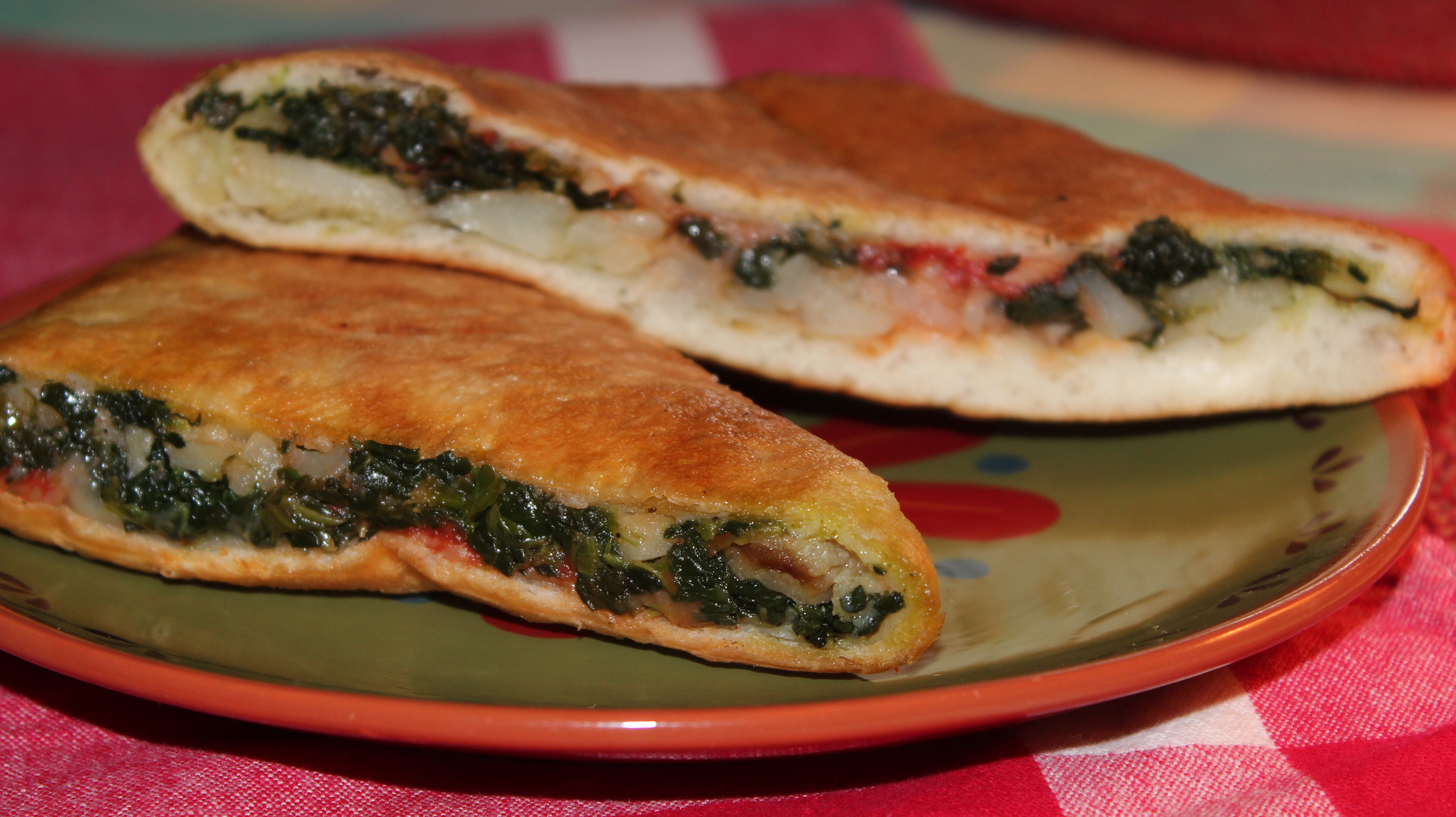
Basically scaciatta can be likened to a stuffed pizza or calzone.  Essentially it is a pizza dough filled with all sorts of savory things like crumbled sausage, sauce, garlicy broccoli, spinach, potato, and mozzarella cheese. The combinations are many, but the primary ingredients in most are the sausage, sauce and cheese with the vegetables varied.

Everyone who loved this delicious Italian specialty, and depended on having it for Easter and Christmas Holidays have not been able to find it because so many of the well-known Middletown bakeries and restaurants are no longer in business. That was true up until recently, that is.  I discovered it again just last week.  Not too far from where I live is a farm market called Gotta’s Farm, where I stopped to buy some fresh vegetables.  As I entered the store an over powering aroma of something wonderful baking caught my attention.  There in the farm market bakery, scaiattas were just being taken from the oven. Warm, flaky and tender dough enveloping all those fantastic ingredients, and oozing with melted cheese.  Who could resist?  Certainly not me.  I bought several pieces to bring home.  Oh, heaven!  The lost is now found and folks from all over the area are finding their way to Gotta’s to savor once again the wonderful flavors of scaciatta.

Scaciatta with Spinach and Potato

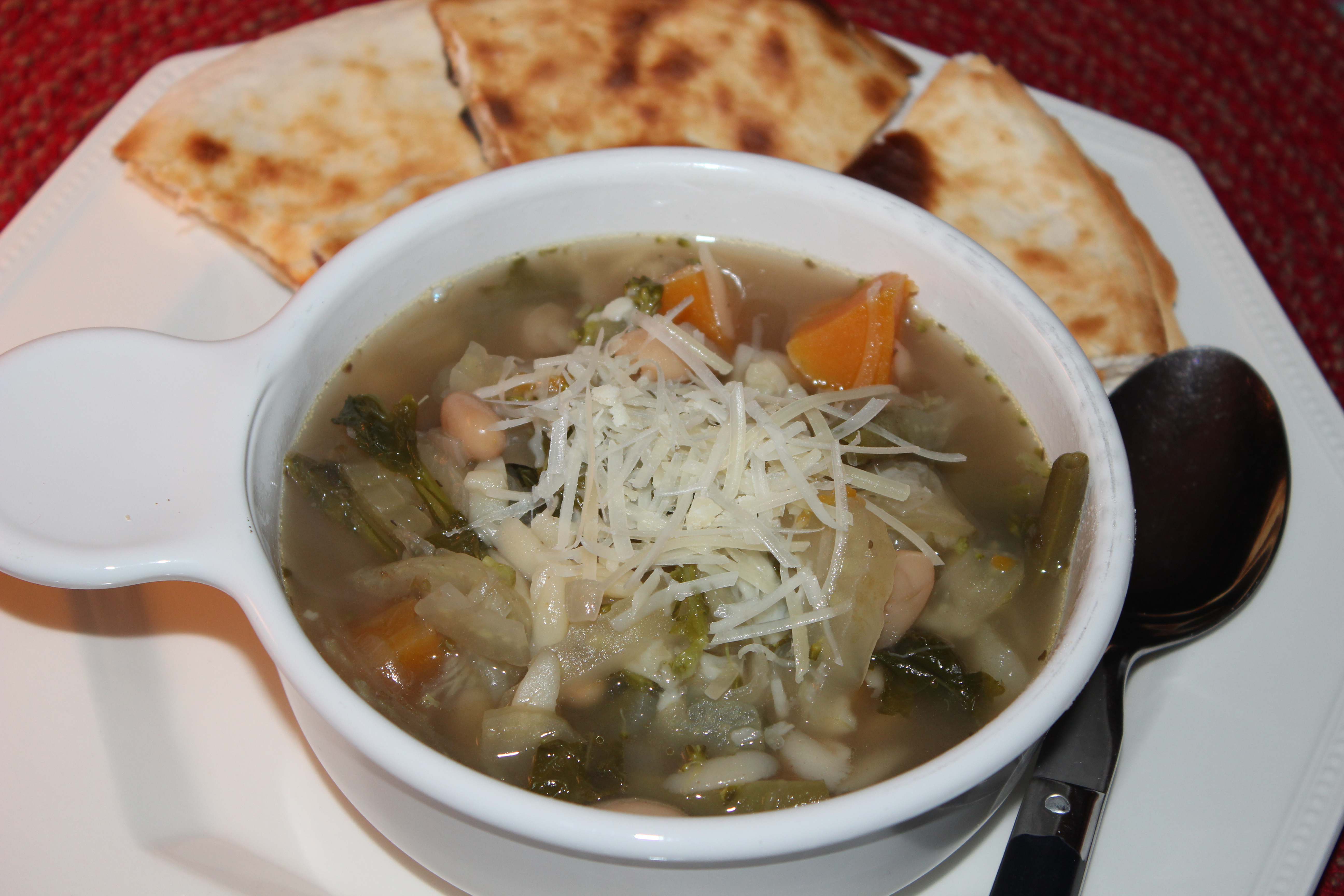
Quick Fall Minestrone

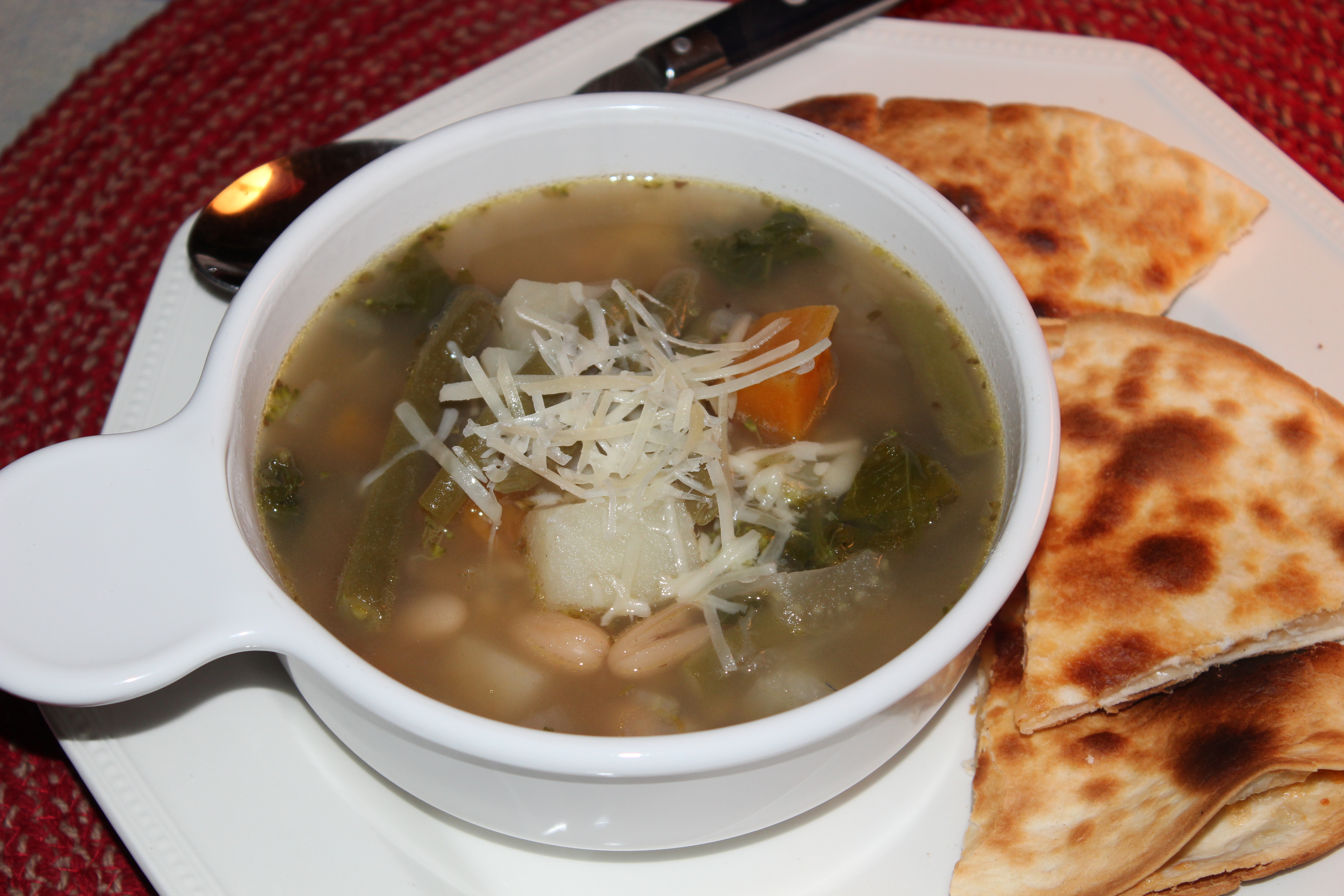
Fall Minetsrone Soup with Cheese Quesadillas

Hit the Road, Jack!  Yep, that’s us. We’re hitting the road, going on a little vacation, going south, going to visit family, going, going, almost gone.  But before I go, I need to clean out the refrigerator, use up all the bits of veggies that are in there.  So what I’m making is a minestrone soup.  This easy soup  is made up of fresh fall vegetables, some orzo and a can of beans, making it hearty and filling.  I plan to freeze what we don’t eat so we will have it waiting for us when we get back home.  I know that after a long day on the road we will be happy to have a warming, nourishing soup to  return to.

While I’m away, posts that I have already written will be published, but I will not be available to respond to your comments for a while.  I hope you enjoy reading what I’ve prepared for the next week or so.  When I get back I hope to have some new sights, foods, and dining experiences to tell you about.

QUICK FALL MINESTRONE  (alias, Clean- out -the- refrigerator- before -I -go -on- vacation soup)

YIELD:  8  servings

  • 1 Tablespoon vegetable oil

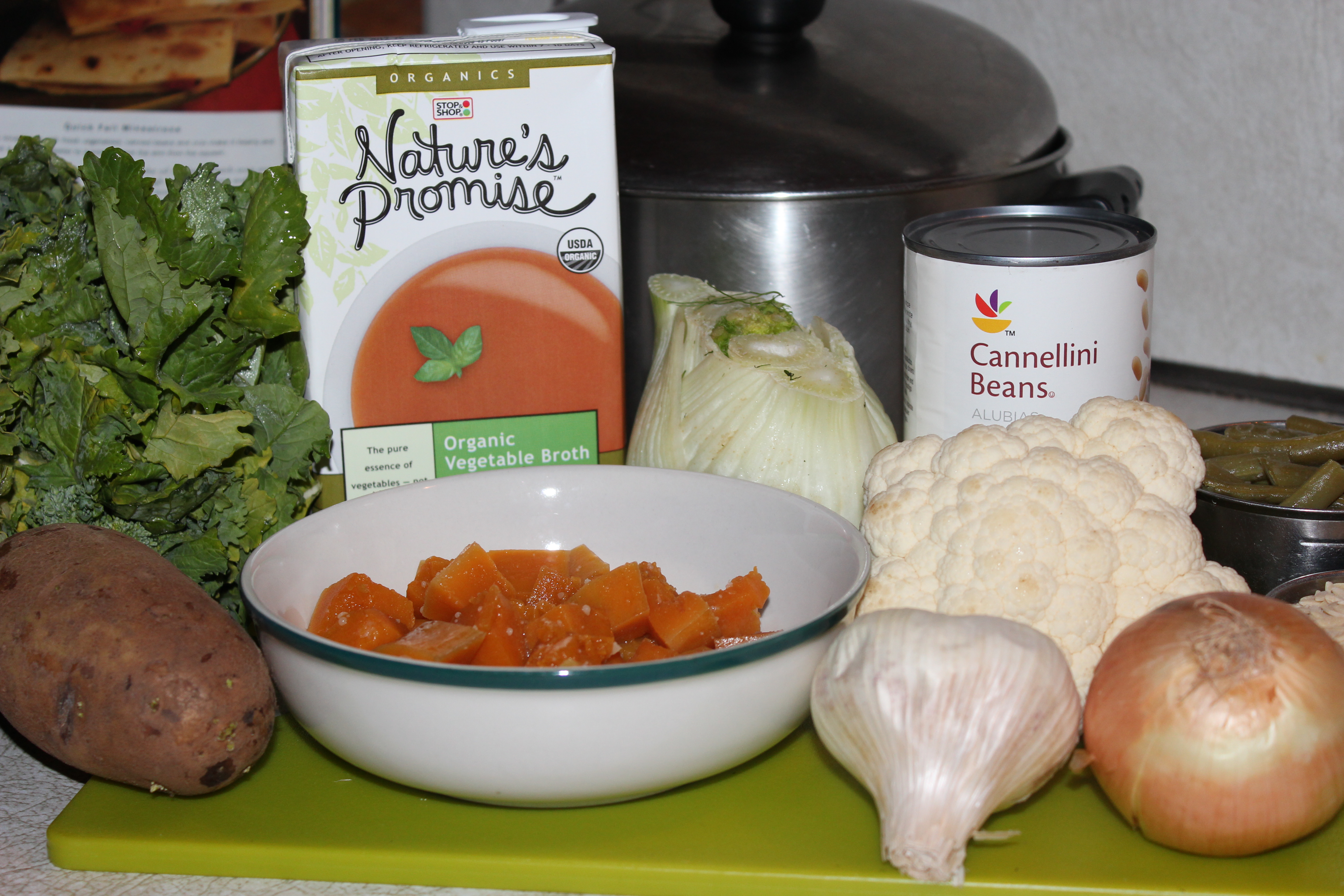
    My ingredients differ slightly from the recipe, because of what I had to use up.

  • 1 cup chopped onion
  • 2 garlic cloves, minced
  • 6 cups vegetable broth
  • 2 1/2 cups cubed peeled butternut squash ( I only had about half that amount so I added about 1 cup of cauliflower florettes)
  • 2 1/2 cups cubed peeled baking potato
  • 1 cup cut-up green beans, about 1/4 pound
  • 1/2 cup sliced carrot ( I used fennel instead)
  • 1 teaspoon dried oregano
  • 1/4 teaspoon ground black pepper
  • 1/4 teaspoon salt
  • 4 cups chopped greens, such as kale, spinach, broccoli rabe
  • 1/2 cup uncooked orzo (rice-shaped pasta)
  • 1 (16-ounce) can cannellini beans or other white beans, rinsed and drained
  • grated fresh Parmesan cheese to sprinkle on top

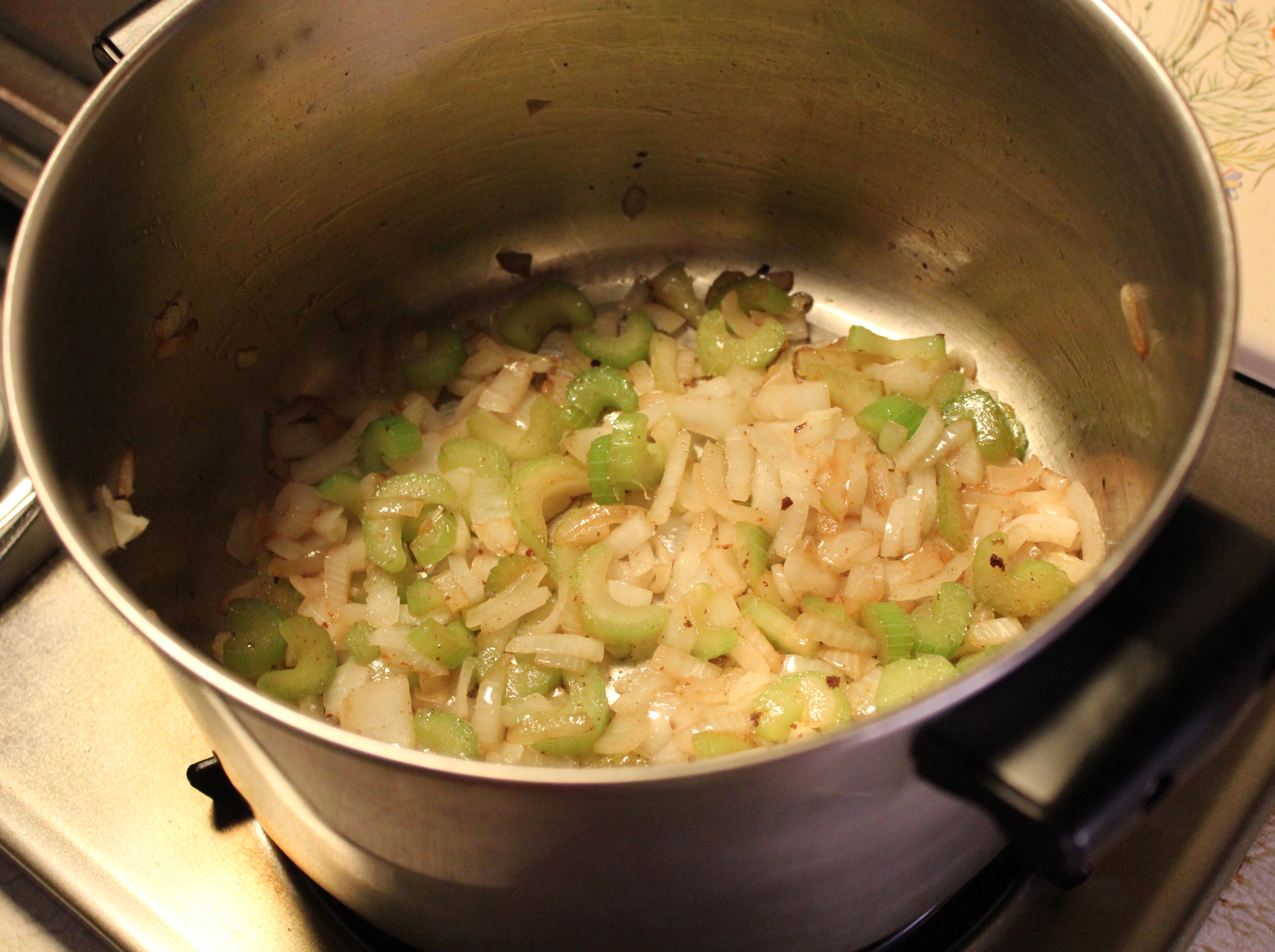
1.  Heat the oil in a large Dutch oven over medium-high heat.  Add onion and garlic, sauté  2 1/2 minutes or until tender.  Please excuse me,  I got so caught up in this step, I forgot to photograph it.  But I’m sure you know what sautéing onions and garlic look like. 🙂

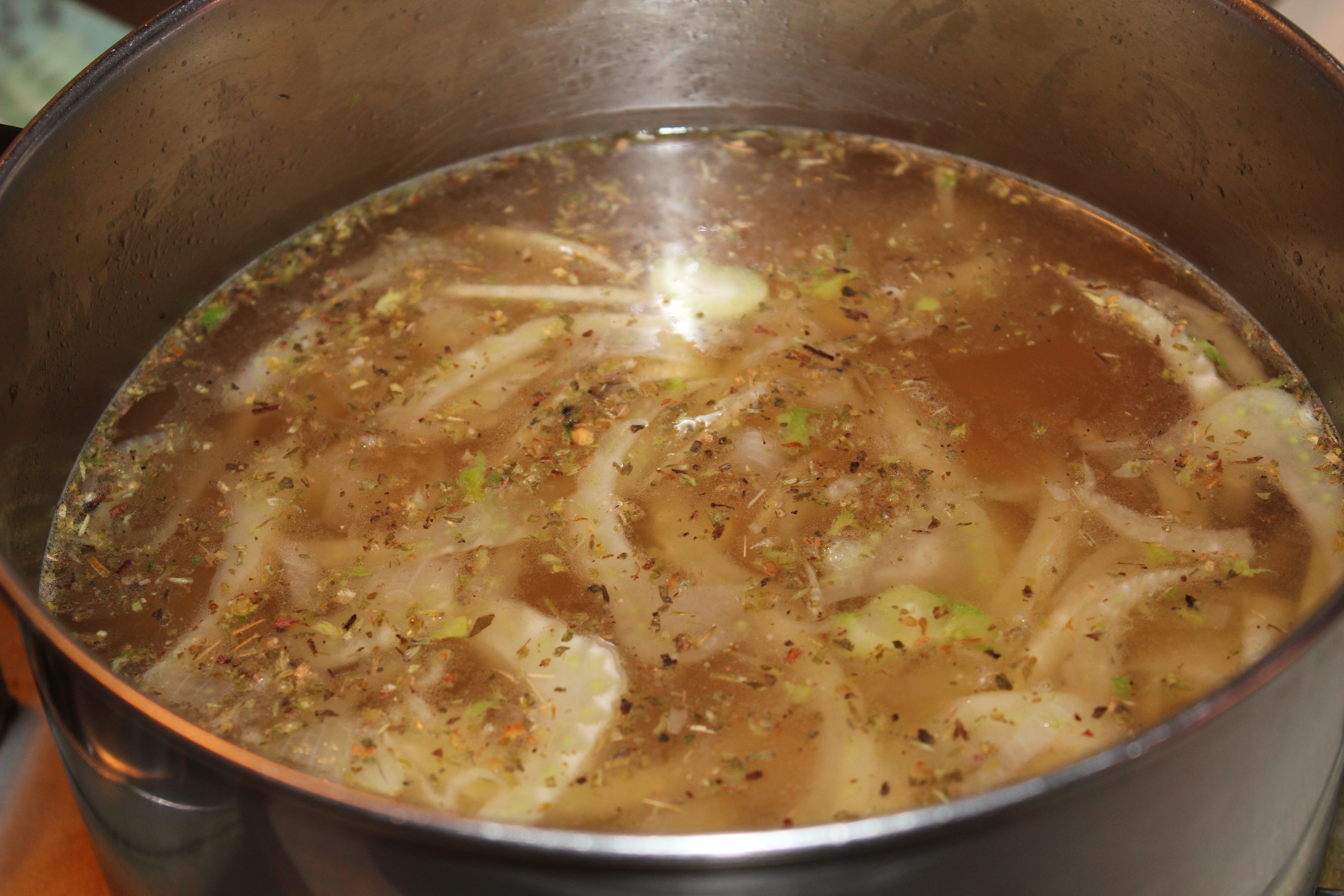
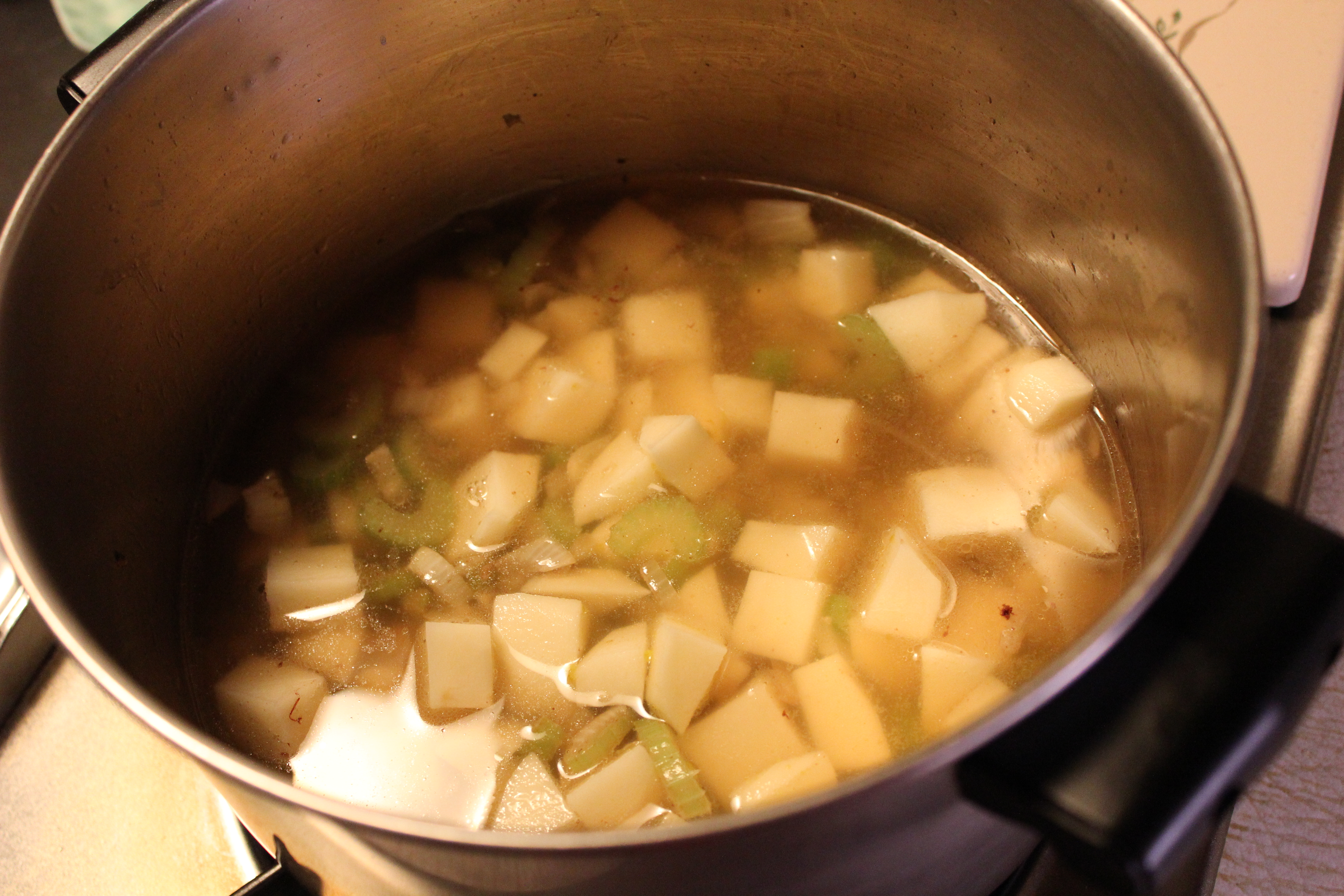
Broth and seasonings added to the sautéed vegetables.

2.  Add the broth and the next 7 ingredients (broth through salt); bring to a boil.  Reduce heat, and simmer 3 minutes.

Greens added; in my version I used broccoli rabe.

3.  Add greens, orzo, and beans;  cook 7 – 10 minutes or until orzo is done and vegetables are tender.

Ready for the soup bowls.

4.  Ladle into bowls and sprinkle with cheese to serve.

My version of Fall Minestrone served with Cheese Quesadillas

To go along with the soup I made Cheese Quesadillas:  6 – inch flour tortillas with Monterey Jack cheese in the middle, warmed in a skillet till cheese melted.

Corn Chowder

Yesterday was a day that I definitely wanted to stay indoors.  Outside we had torrential rain and strong gusty winds.  Even though the air was humid and warm it put me in the mood for a hot soup for dinner.  Remembering the corn I had cut from cobs and froze, I decided to make a corn chowder.

Corn Chowder

There are any number of recipes out there for corn chowder, and I have tried several, but the one I keep coming back to is this one which includes bacon.  I like the smokiness it adds, and the bits of color in the finished soup.  This version also includes potatoes, and they make it a bit more hearty, especially  if served for a dinner meal.  This could easily become a vegetarian meal by omitting the bacon and using a vegetable broth instead of chicken broth.

CORN CHOWDER

YIELD:   about 4 servings

INGREDIENTS

  • 2 slices thick bacon, cut into small pieces
  • 1 medium onion, chopped
  • 2 stalks celery, sliced

    Ingredients for Chowder. One can of chicken broth, not two.

  • 3 Tablespoons coarsely chopped red or green pepper
  • 1 can chicken broth (approx. 2 cups)
  • 1 cup water
  • 2 medium potatoes, cup into small chunks
  • 1/2 teaspoon salt
  • 1/2 teaspoon black pepper
  • 1/2 teaspoon dried basil
  • 1 bay leaf
  • 1 cup milk
  • 2 cups fresh or frozen corn kernels
  • chopped parsley, optional

DIRECTIONS

1.  In a large saucepan, cook bacon till crisp.  Remove to paper towels to drain.  Reserve bacon drippings in pan.

2.  Add onion, celery and pepper to saucepan. Sauté over medium heat until golden, about 5 minutes.  (I didn’t have any peppers so I added some roasted red pepper at the end with the corn).

Add broth, water and potatoes, salt, pepper, basil, and bay leaf.  Bring to a boil; reduce heat, and simmer covered 10-15 minutes or just until potato is tender.

3.  Stir in  milk, corn,  and bacon;  return to a simmer, stirring occasionally and cook just to warm through.  Do not allow to boil.  Prior to serving sprinkle in chopped parsley if using.

Corn Chowder and Rustic Whole Grain Bread: True Comfort Food.

When I haven’t made this chowder in a while I forget how good it is, but one taste is all it takes to make me know how much I love it, and why this is the one recipe I make over and over.  I’m so happy to share it with you.  You must make it on a damp chilly day and serve it with a hearty loaf of rustic bread.  True comfort food!

SOURCE:  This clipping has been in my recipe box for ages.  I don’t know it’s origins.

Time to Make the Doughnuts!

Pumpkin Cake Doughnuts

I’m not a doughnut person. Glazed, sticky, sweet doughnuts don’t do anything for me. Neither do filled doughnuts, like lemon cream, custard, or raspberry.  Ok, if you twisted my arm I would eat one, and most probably like it, but I don’t go out of my way for doughnuts.  Am I being clear here?   That’s why it’s so surprising that I was all over this recipe when I first came upon it.  I think because they contain pumpkin.  Pumpkin anything will get me every time.

Pumpkin is one of those winter squashes I have been writing about.  They’re everywhere at this time of year.  But when cooking or baking with pumpkin  you don’t want to use the Jack-O-Lantern type, but instead use the small sweet ones called Sugar Babies (or similar name).

“Sugar Baby” Pumpkins

The flesh of these cuties is bright orange, sweet, and smooth, and while the canned version is very convenient, it is not difficult to cook the real deal yourself.  So if you’re making your own pumpkin puree, cut the pumpkin in half, remove seeds, then bake or steam it,  scoop out the flesh, and puree it using a processor, blender, or hand blender.  This can be packed in measured portions and frozen, ready for however you will use it.

When choosing a pumpkin, make sure it’s firm and without soft spots. Under cool conditions pumpkins keep for months without rotting–they love a 50-60 degree porch.  In fact some get sweeter over time, so you need not feel pressured to cook and bake on the same day you buy the pumpkin. And remember the health benefits of this squash: it’s packed with fiber and is a great source of vitamin A.

Hopefully I’ve encouraged you to try using fresh pumpkin–it’s not hard to do–but if not, the canned version is certainly acceptable.  The recipe that follows is for pumpkin cake doughnuts.  With their bright orange color, moist texture, and pumpkin flavor, these baked, not fried, doughnuts are the perfect thing to have with a cup of coffee or a glass of apple cider.

The amount of dough this recipe makes is generous, and I was somewhat limited in pan choice since I only have one doughnut pan which holds six doughnuts.  So I improvised and used a mini bundt pan, only filling each well a third way full. Still having more dough to use, I poured the rest into a six-cup muffin pan, and sprinkled the tops of them with cinnamon chips.  In total,  I got 18 doughnut-bundt-muffins.  No matter what shape they’re in, they taste fantastic.  Perfect for Fall!

PUMPKIN CAKE DOUGHNUTS

YIELD:  (per recipe)  12 doughnuts

INGREDIENTS:

  • 1/2 cup vegetable oil
  • 3 large eggs
  • 1 1/2 cups sugar
  • 1 1/2 cups pumpkin puree
  • 1 1/2 teaspoons pumpkin pie spice, or 3/4 teaspoon cinnamon, plus 1/4 teaspoon each nutmeg and ginger
  • 1 1/2 teaspoons salt
  • 1 1/2 teaspoons baking powder
  • 1 3/4 cups + 2 Tablespoons flour
  • coating:  cinnamon sugar

DIRECTIONS:

1.  Preheat oven to 350 degrees.  Lightly grease 2 standard doughnut pans.  If you don’t have doughnut pans you can bake these in muffin tins, or other similar pans.  They just won’t look like doughnuts.

2.  Beat together the oil, eggs, sugar, pumpkin, spices, salt and baking powder until smooth.  Hint:  mix spices and baking powder with the sugar using a whisk for good distribution.

3.  Add the flour, stirring just until smooth.

4.  Fill the wells of the doughnut pans about 3/4 full; using a scant  1/4 cup batter in each.  If you’re making muffins, fill each well about 3/4 full;

5.  Bake the doughnuts for 15 – 18 minutes, or until a cake tester inserted into the center of one comes out clean.  Muffins will need to bake for 23 – 25 minutes.

Pumpkin Muffins with Cinnamon Chips

6.  Upon removing from the oven let the doughnuts cool in their pans about 5 minutes, then loosen their edges and transfer them to a rack to cool.

7.  While the doughnuts are still warm, gently roll them in a cinnamon-sugar mixture to coat.  For muffins sprinkle the tops heavily with the cinnamon sugar.  Store at room temperature for several days

Pumpkin Spice Doughnuts

SOURCE:  King Arthur Baking

Thai-style Chicken Squash Stir Fry

Thai-Style Chicken and Squash Stir-Fry

With the weather still being relatively warm I wanted to prepare something light yet still take advantage of some fall vegetables, so I made up a stir-fry that incorporates butternut squash. The original recipe for this dish called for snow peas and carrots, but I substituted the butternut squash instead. It incorporates the robust flavors of Thai cuisine.  The ingredient list looks long, but if you get all of the ingredients prepped and organized before proceeding, the cooking itself is quick.  Serve it with steamed rice, fried rice, or to save on carbohydrates, wrap it in lettuce leaves.

THAI-STYLE CHICKEN, BUTTERNUT SQUASH, AND ONION STIR-FRY

YIELD:   6 servings

INGREDIENTS

  • 1 pound boneless, skinless chicken breasts, trimmed and thinly sliced

    Prep all the ingredients first.

  • 1/4 cup soy sauce
  • 1/4 cup mirin, rice wine, or dry sherry
  • 1/4 cup water
  •  2 Tablespoons plus 1 teaspoon cornstarch, divided
  • 2 Tablespoons toasted sesame oil
  • 3 Tablespoons fish sauce
  • 1/4 cup low-sodium chicken broth
  • 1 Tablespoon fresh lime juice
  • 1 Tablespoon sugar
  • 2 teaspoons freshly ground black pepper
  • 4 teaspoons vegetable or peanut oil, divided
  • 1 small butternut squash ( about 1 pound), peeled, seeded, and cut into 1/2-inch cubes
  • 1 onion, cut into thick wedges
  • 4 medium sized garlic cloves, minced
  • 2 teaspoons minced fresh ginger
  • 1/2 cup finely chopped fresh mint or cilantro
  • 1/3 cup crushed unsalted peanuts (optional)

DIRECTIONS

1.  Wrap chicken breast pieces in plastic and gently pound them very thin.

2.  In a medium bowl, whisk together soy sauce, mirin, and water; add chicken, toss to combine, and chill 15 minutes.

3.  In another medium bowl, whisk together 2 Tablespoons cornstarch and sesame oil, set aside.

4.  In a small bowl, whisk together fish sauce, broth, lime juice, sugar, pepper, and 1 teaspoon cornstarch; set aside.

5.  Drain chicken, pat dry, and toss with cornstarch-sesame mixture until thoroughly coated.  Heat 2 teaspoons vegetable oil in a large non-stick fry pan or wok over high heat until just smoking.

Add chicken, using tongs to separate and spread pieces out, and cook, stirring, until both sides are well browned and interior is almost cooked through, 2-3 minutes.  Transfer to a large bowl.

6.  In now empty pan, heat remaining 2 teaspoons oil until smoking and cook butternut squash, stirring occasionally, until just tender and browned on the edges, about 6 minutes; transfer to bowl with chicken.

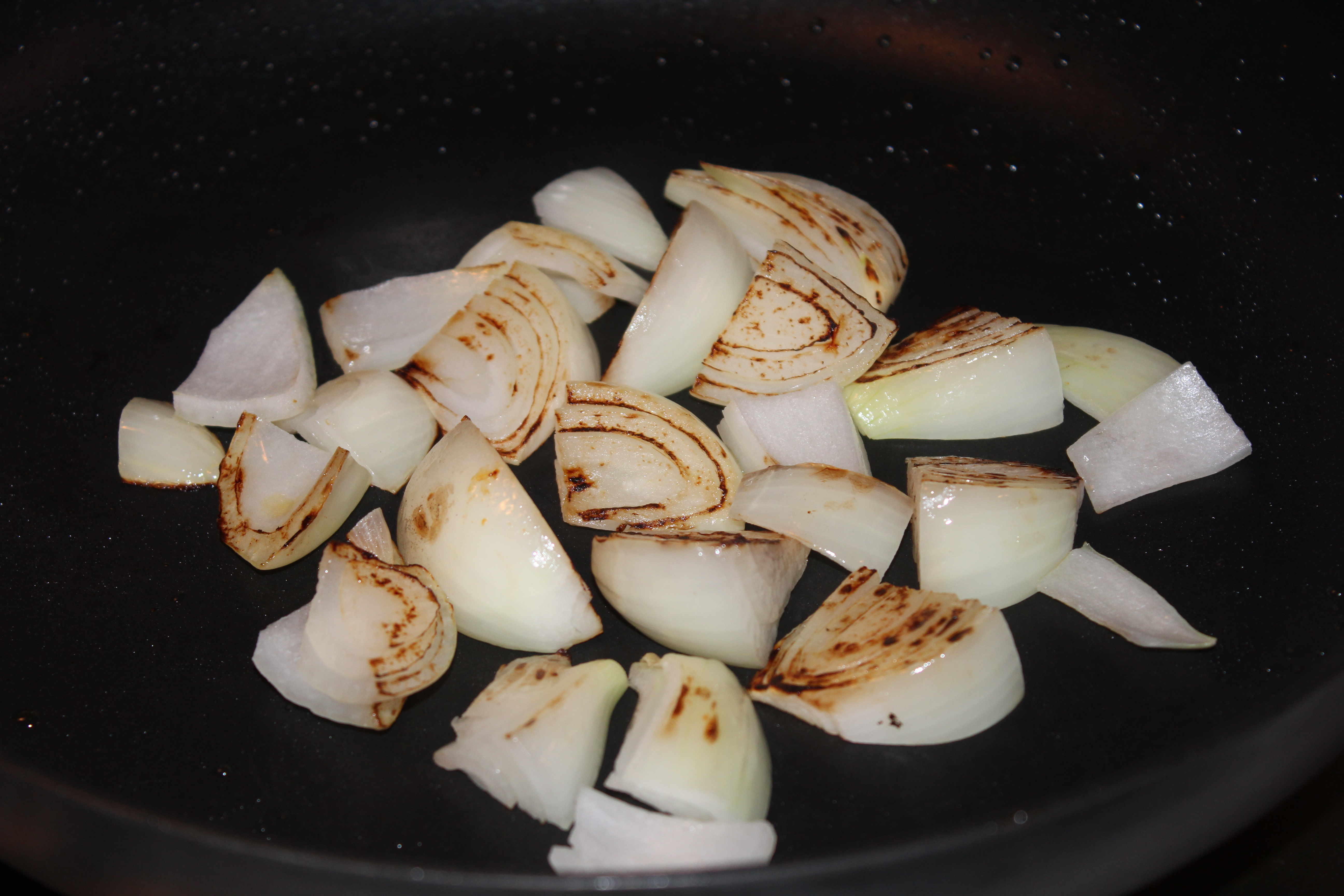
Add onion wedges to pan and cook, without moving, until nicely charred on one side, about 1 minute; continue cooking for an additional minute, stirring frequently.

Push onions to the outside edge of the pan; in the center, add garlic and ginger and cook, stirring until fragrant, about 30 seconds.

Putting it all together.

7.  Move onions back to center of pan, add reserved chicken and squash, and stir in fish-sauce mixture.  Cook, stirring frequently, until sauce thickens, about 2 minutes.

Transfer to serving dish, garnish with herbs and crushed peanuts ( if using) and serve immediately .

SOURCE:  Adapted from a recipe in Cooking Light

Emphasis on Squash

Fall arrives at my local farm market.
Courtesy, Gotta’s Farm

I wasn’t ready for it but now that its here I’ve adjusted to the new season. Suddenly I want to eat foods that represent Fall like apples, pears, ginger cookies, hermits, any thing with caramel, squash, pumpkin —–oh my, so many foods, so little time to get my fill before the farmer’s markets close for another year.

I think I’ve had just about enough zucchini and yellow squash.  I’m craving the bright color and flavors of winter squash.  It’s called winter squash but that’s not true, really.  It was planted in the spring like all the other vegetables, it’s being picked now, we just eat it mostly in the winter.  There are quite a few squash that are put into this category such as the butternut, acorns, Hubbards, spaghetti, and delicatas.  Winter squashes are fully grown–picked in September and October—with thick skins that keep them fresh and edible  well into winter months.

The long time they spend on the vine does more than give them a hard shell; it also gives the flesh time to develop the sugars and deep warm color that is its signature.  Winter squash are packed with so many vitamins and nutrients that it isn’t just delicious and comforting—it’s so good for you.  Extremely versatile, we can cook it into soups, add it into pastas, include it in a salad, or simply roast it with a bit of oil, salt and herbs.  The only real challenge is removing that thick skin, a task made easier by a sharp peeler or paring knife.  Some squash can be baked in their shells and the flesh scooped out, thereby sidestepping the peeling part.

I expect I’ll be sharing a variety of recipes with you that make use of squash, since we really like it and eat it frequently.  By way of introduction, I thought I would describe for you some of the many winter squash, that are now available in the farmer’s markets and grocery stores.  Perhaps you will be adventurous and try one that you have not had before.

Acorn Squash
Courtesy Gotta’s Farm

ACORN:  Found in most supermarkets, acorn squash is one of the most popular squash varieties.  It is small, acorn-shaped, and can range in color from dark green to yellow and white.  Its surface is ribbed, making it difficult to peel, so the best way to prepare it is to cut in half or quarters and  top with butter, brown sugar or maple syrup, and bake.  Its flesh turns sweet, tender and nutty and can be easily scooped from the shell.  I like to fill the indentation with sliced apples or raisins, then top with brown sugar and butter and roast until tender.

Buttercup Squash
Courtesy Gotta’s Farm

BUTTERCUP:  At a quick look you might mistake this squash for an acorn because of its deep green color, but instead of ribs it has white striped markings.  It is more round with a top that looks like a little hat.  It makes me think of a turban.  It too, has a very hard outer shell and is best cut in half or wedges, seeded, then roasted.  Its flesh is bright orange, much like an acorn squash, and can be prepared in the same way.

Butternut Squash
Courtesy, Gotta’s Farm

BUTTERNUT:  This squash is readily available in the supermarket from early fall through winter.  It is easily identified by its tan, smooth skin, and elongated bell shape. The true name for this squash is the Waltham Butternut, named for the Massachusetts city where it was first grown.  It is perhaps the best known and most widely used squash because it an be prepared in a variety of ways.  The flesh is smooth, fine and sweet, making it excellent for purees, though it is also good cubed and steamed or roasted.  Butternut squash is a good substitute for pumpkin in pie-making, and one of my favorite ways to use it is in Butternut Bisque, a delicious autumn soup.

Delicata Squash
Courtesy, Gotta’s Farm

DELICATA:  True to its name this petite, pale yellow squash has a delicate thin skin that becomes very tender when cooked.  The flesh is creamy, with a sweet, corn-like flavor.  It can be roasted and used in pastas or salads, or sautee slices in butter or olive oil until brown and caramelized.

Hubbard Squash
Courtesy, Gotta’s Farm

HUBBARD:  These are big, blue-gray, and bumpy.  They are the giants of the squash world, growing to be hugh with very thick skins.  Because of their size, they are hard to handle and manage.  If stored at cool temperatures, this is a squash that can be kept for up to six months. You may see them in the supermarket already cut into smaller pieces and packaged to be sold by weight. Home cooks who break one down, or purchase one pre-cut, will find the flesh sweet and tender when cooked.  Cut it into small pieces and boil, roast or steam it. It’s sweet taste makes it perfect for soups and pies.

SPAGHETTI:  Large and golden in color, the spaghetti squash is best known for its stringy, texture, which, when cooked presents a unique surprise.  After cooking the flesh separates and the strands resemble spaghetti pasta.  It can be prepared in a variety of ways including boiling, baking or microwaving. Once the flesh is tender, use a fork to “rake” out the strands all the way to the skin and serve it in the same way as pasta with seasonings, sauces, meats, or other vegetables. When selecting one for flavor and ripeness, look for a large spaghetti squash with deep yellow color.

Spaghetti Squash
Courtesy, Gotta’s Farm

Crab Imperial

Crab Imperial

With the remains of the crabmeat my husband brought home  I made this dish.  In a sense it was an experiment because  I had not made it before, but I had all the ingredients on hand so I gave it a try.

Before I get to the recipe I thought I would share with you some facts about crabmeat.  Fresh crab meat will keep in your refrigerator for about 3 days, but  crabmeat which has been pasteurized will keep for several months in the refrigerator.  One pound of crabmeat equals 3 cups.  Crabmeat is packaged as follows:

  • Backfin, or Lump:  Solid lumps of white meat from the body muscles of the crab—the best!  It contains very little shell or cartilage, and is preferable in special recipes such as Crab Imperial or Crabmeat Salad.
  • Regular:  Small pieces of savory white meat from the body.  Still considered excellent, but takes more picking over for cartilage and shell removal.  Great for crab cakes, casseroles, salad, dips, etc.
  • Special:  A mixture of backfin and regular; also fine for dishes listed above.
  • Claws:  Meat from claws has a brownish tint, and comes in thin pieces.  It’s mostly used where appearance isn’t important.

The crabmeat that I had came from two large crab legs, part of which I had already used for the crab cakes, and what was left weighed about half pound, so I made only half of the following recipe.  The full recipe makes 4-5 servings.

CRAB IMPERIAL

SERVINGS:  4-5

INGREDIENTS

  • 1 egg
  • 1/4 cup mayonnaise
  • 1 teaspoon Worchestershire sauce
  • 3 dashes Tabasco sauce
  • 1/2 teaspoon salt
  • 1/4 teaspoon thyme
  • 1/2 teaspoon dry mustard
  • 3 Tablespoons parsley, chopped
  • 1 pound crabmeat, backfin or lump preferred
  • 2 Tablespoons butter, melted
  • 10-15 Ritz crackers, crushed

DIRECTIONS

1.  Preheat oven to 375 degrees. Grease a shallow baking dish or individual shell dishes.

2.  Remove any shell or cartilage  from crab meat.  Mix together all ingredients except crabmeat.  Gently stir in crabmeat.

3.  Put mixture in prepared baking dish(es).  Mix crushed crackers with the melted butter, then sprinkle on top of crab mixture.   Bake for 15-20  minutes.

My Evaluation:

Although we both liked the dish as prepared and presented here, I think if I make it again I would modify it in the following ways:  Add a few bay scallops and shrimp to the mixture for some variety in texture. Because the crab I used came from the legs, the pieces were small, and therefore there wasn’t enough “chew” factor.  The overall color of the dish was rather bland, so I would add some chopped green onion, maybe some roasted red pepper for color. Lastly I think it would be more enticing if it were served in a small pastry shell like phyllo cups.  These are just a few thoughts “in hind-sight” for anyone who decides to make it.  If you make it and have some good ideas to improve upon the recipe I would be interested to hear about it.

Crab Imperial

SOURCE:   Savory Shellfish Recipes of the Shore