Challenge Day #1: Pan-Seared Steak with Balsamic Onion Sauce

Pan-Seared Strip Steak with Balsamic Onion Sauce.

Pan-Seared Strip Steak with Balsamic Onion Sauce.

Day # 1 without a refrigerator.  I produced a pretty terrific dinner today, and I also made chicken broth for a future soup.  My dinner consisted of Strip Steaks with Balsamic-Glazed onions,  Baked Butternut Squash with Garlic and Herbs, and Hasselback Potatoes.   For today’s recipe I will be telling you how to pan-sear a steak, and a quick way to make caramelized onions.

Whenever we go to our favorite steak-house, I like to order a strip steak with a pile of caramelized onions.  I almost like the onions better than the steak.  They are so rich and glossy, they turn a simple seared steak into something really special.  I had purchased a package of two strip steaks with the thought of trying to recreate this simple dish at home.  Faced with the fact they had started to defrost, I realized the time to give this meal a try was now.

The part of this dish that takes the most time is caramelizing the onions–probably about 45 minutes.  When cooking the steaks only takes about eight to ten minutes, I wanted to speed up cooking the onions as much as I could.  So here’s where I hit upon a short-cut.  I cooked the onions in a little oil for about 8-10 minutes till they started to brown,
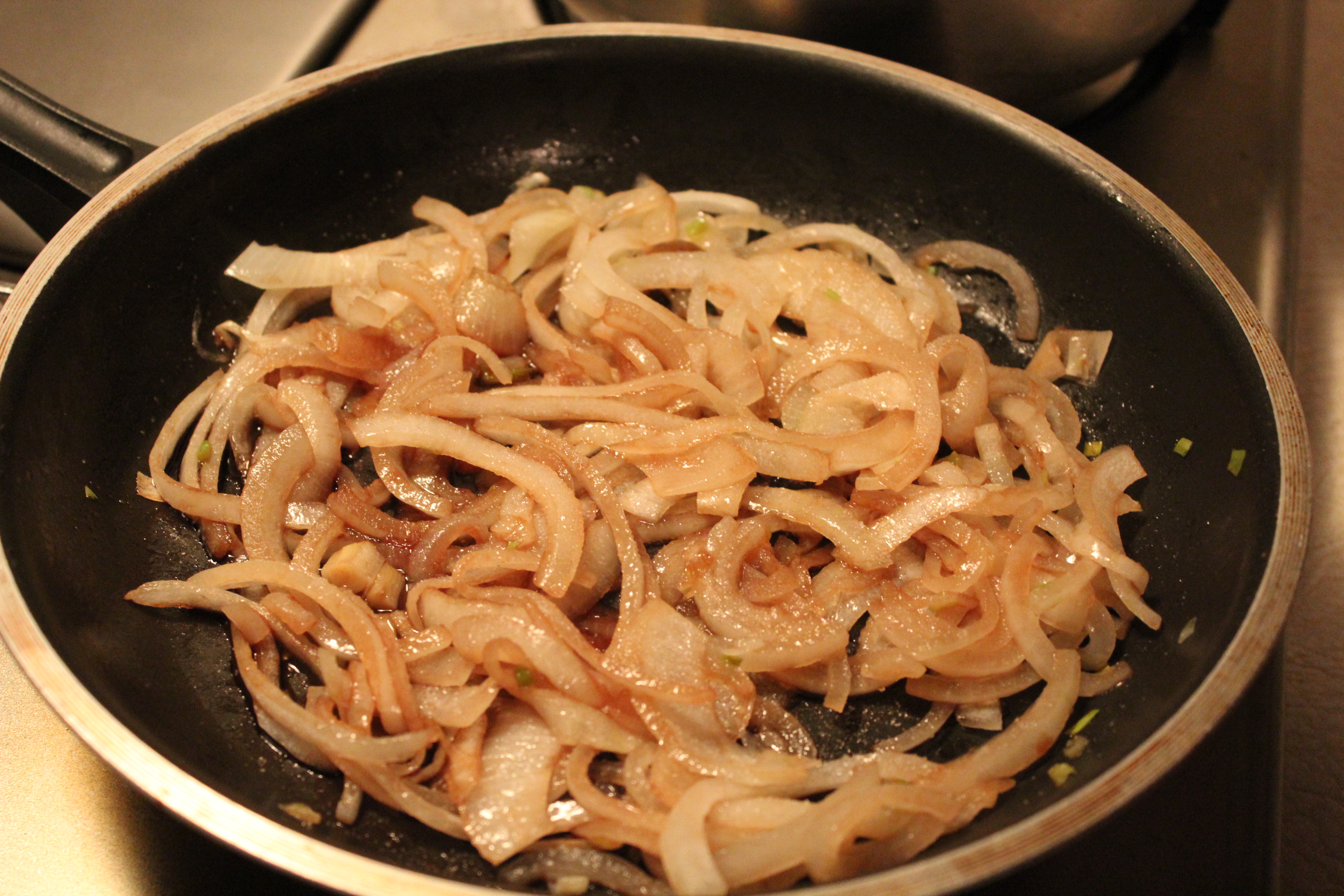
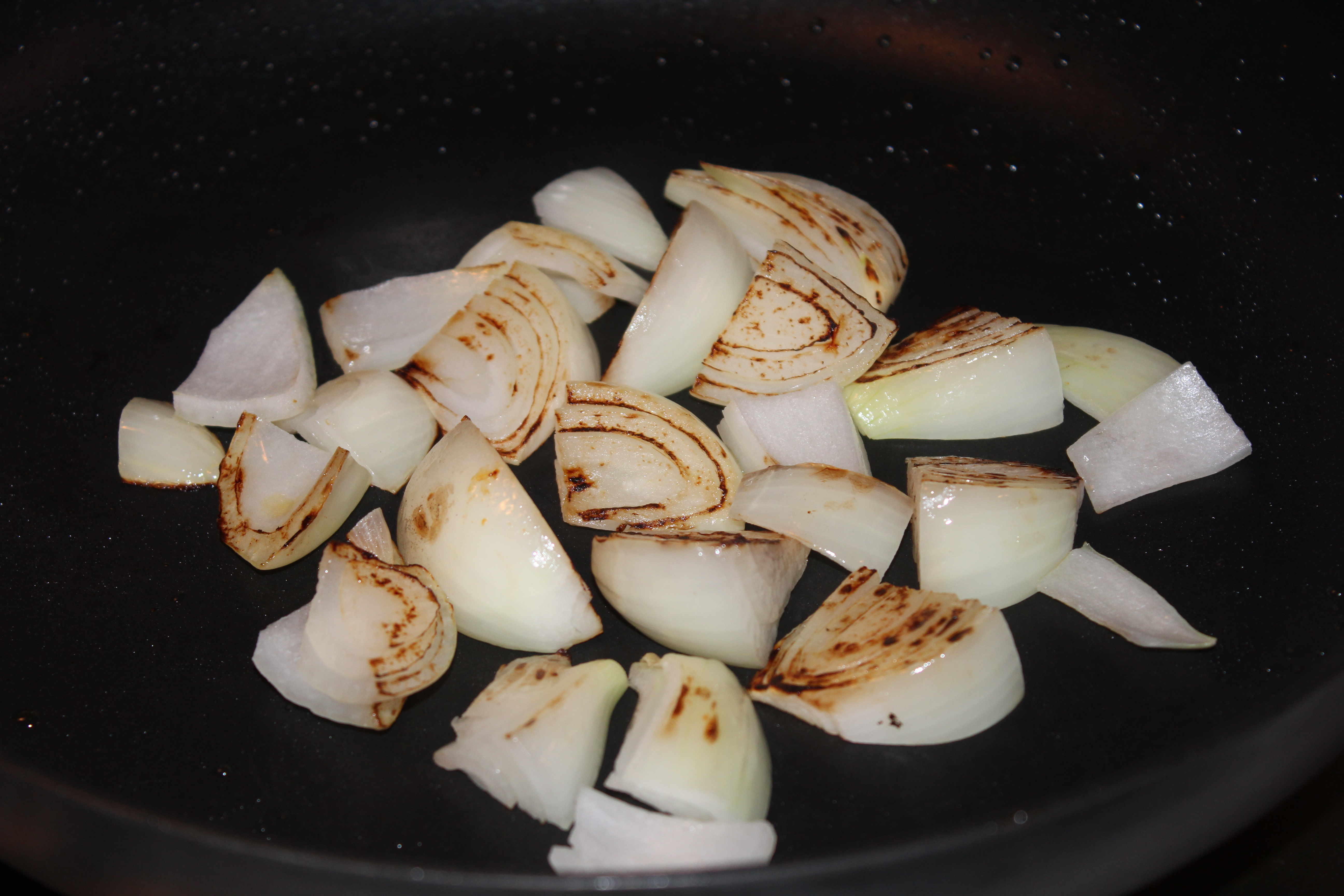
Onions browning in a little oil.

Onions browning in a little oil.

and then added balsamic vinegar to the pan.

A nice variety of balsamic, with a hint of pomegranate added.

A nice variety of balsamic, with a hint of pomegranate added.

Two minutes later the onions were soft and fully browned.  How could that be, you ask?  Well, the sugar in the vinegar speeds up the browning process, and the steam generated by the simmering vinegar softens the onions in a flash.  Finally, the vinegar turns the onions brown.  My balsamic onion sauce may not taste exactly like caramelized onions, but it came pretty darn close.

PAN SEARED STEAK WITH BALSAMIC ONIONS

SERVES:   2-3

INGREDIENTS

  • 3 Tbspns vegetable oil
  • 2 large onions, sliced
  • salt and pepper
  • 2 boneless 8 – 10 ounce strip steaks
  • 1 garlic clove, minced
  • 1/4 cup balsamic vinegar
  • 1 tspn. minced fresh (or 1/2 tspn. dried) rosemary

1.  Heat 2 Tbspns oil in large skillet over medium heat.  Add onions and salt and cook, stirring frequently, until lightly browned, about 8 – 10 minutes.   Transfer onions to a bowl.

2.  Add remaining oil to skillet and heat over medium-high heat until shimmering.    For a nicely browned and flavorful crust, pat the steaks dry with paper towels, and season with salt and pepper.  Cook steaks, without moving, until browned on first side, 4 – 5 minutes.  Flip steaks and continue to cook until browned on second side, 3 – 4 minutes more.  Transfer steaks to a platter and cover with foil.

3.  Discard fat in skillet, return onions to pan, and set over medium heat.  Add garlic and cook until fragrant, about 30 seconds.  Add 1/4 cup vinegar, rosemary, and cook, scraping up browned bits, until thick and syrupy, about 2 minutes.  Pour any accumulated steak juices into pan and mix in.  Season with salt and pepper.

4.  Slice steaks crosswise into 1/4 -inch slices and transfer to serving platter.
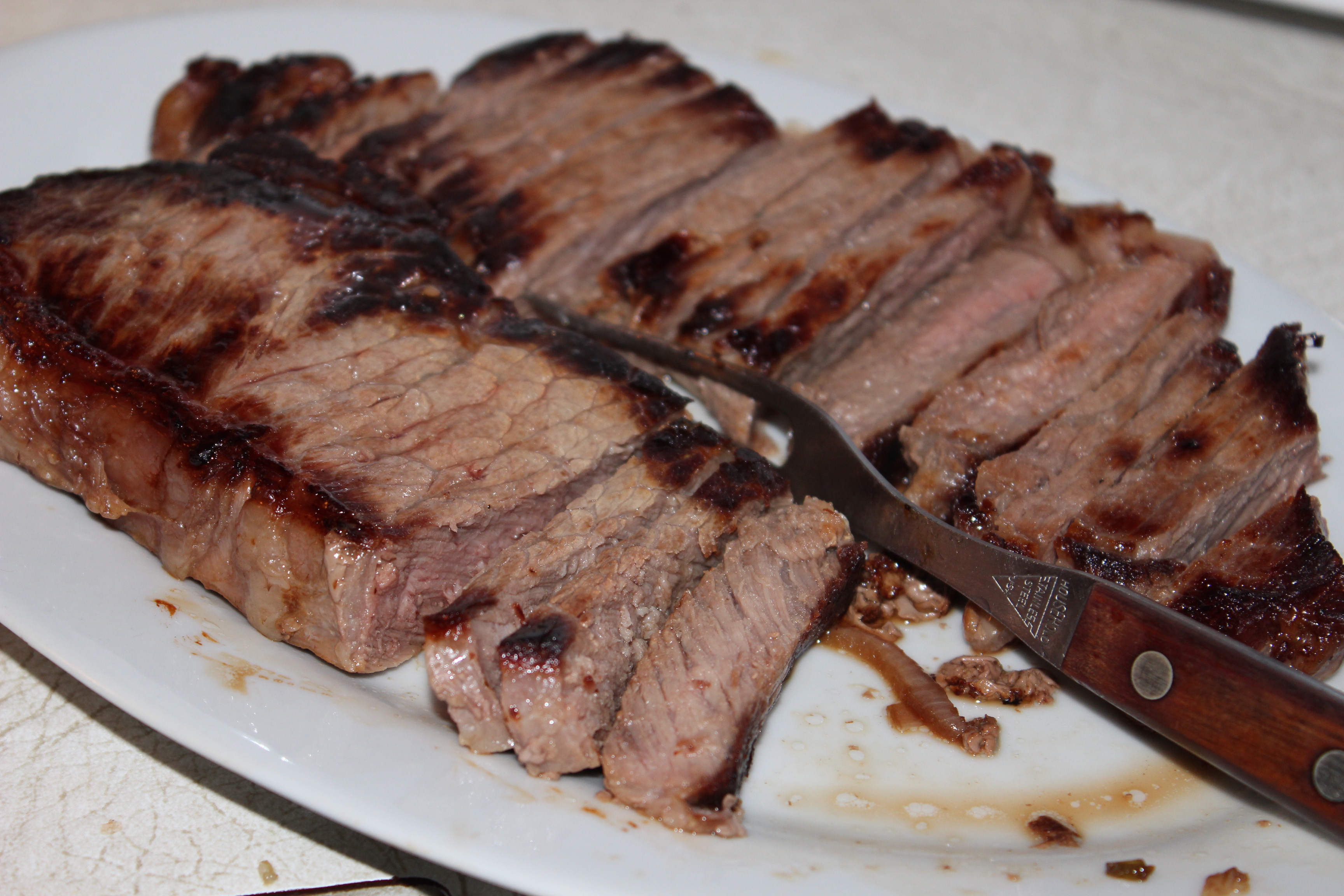
Slice steaks crosswise into 1/4-inch slices.

Slice steaks crosswise into 1/4-inch slices.

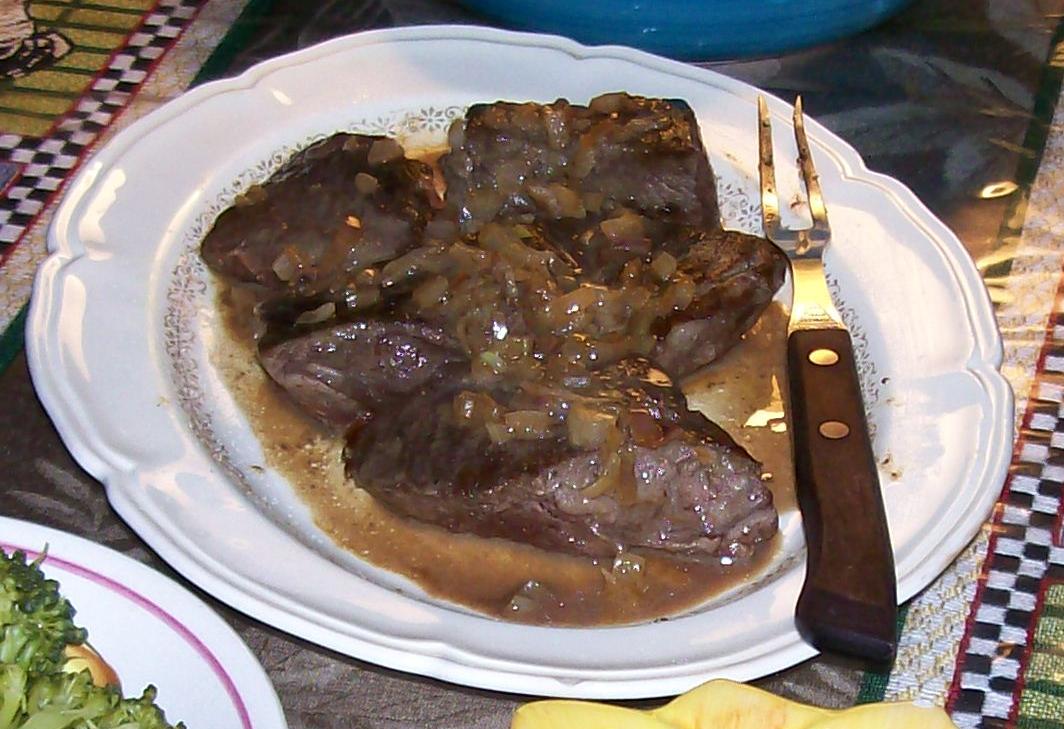
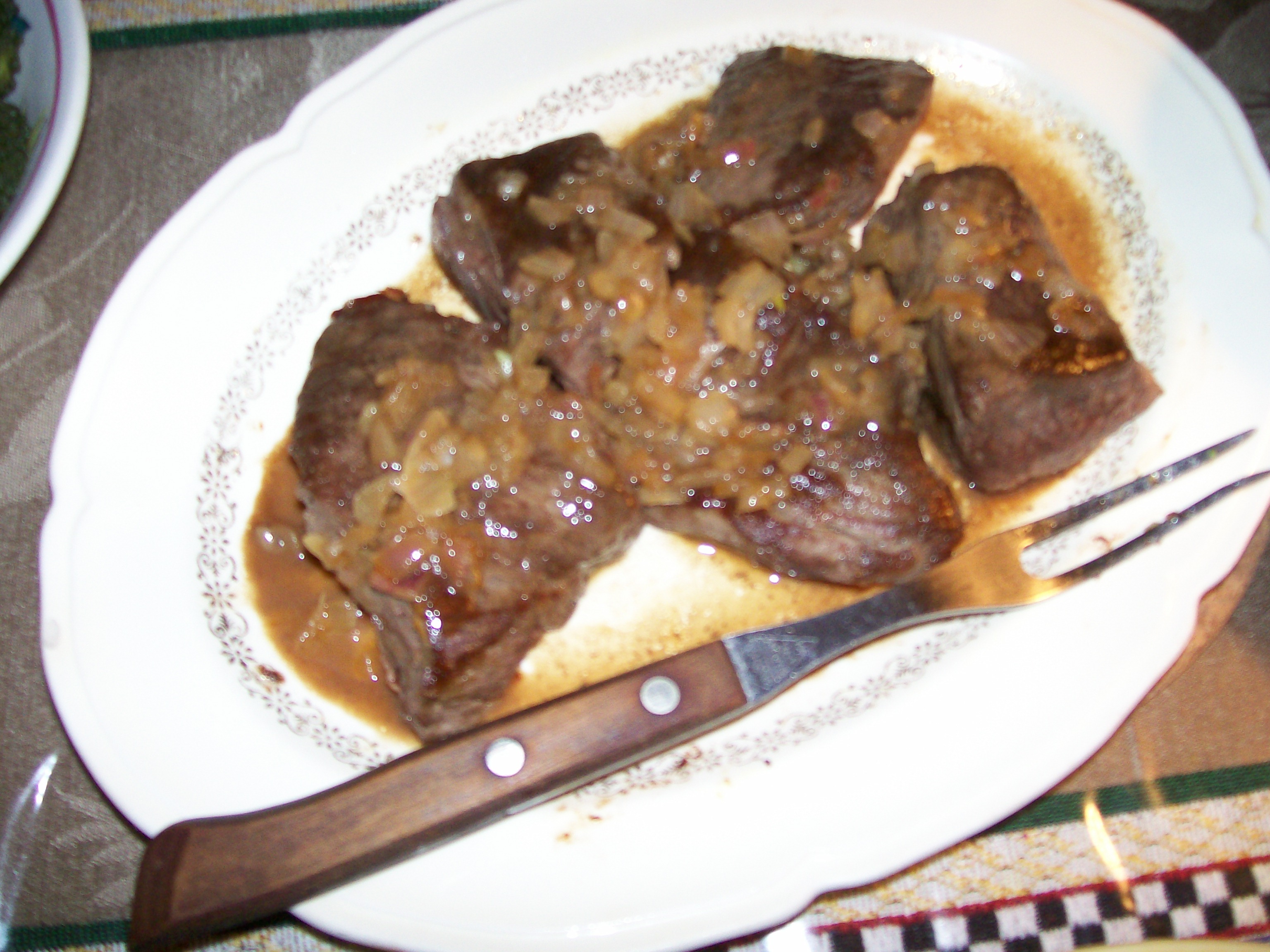
Spoon onions and sauce over steak.

Steak with Onions and Sauce.

Steak with Onions and Sauce.

SOURCE:   COOK’S COUNTRY

Pork Chops with Roasted Apples and Onions

Pork Chops with Roasted Apples and Onions

I’m always looking for different ways to prepare pork chops.   We eat pork fairly often, not just chops, but other cuts as well.  It’s high in protein and low in carbohydrates; and depending on the cut can also be pretty low in fat.  So pork is on our menu on a regular basis, but I get bored with preparing foods the same way too often, thus the need for variety.  When this recipe turned up in the Cooking Light Magazine, Sept. 2012. I clipped it immediately because of the pairing of pork with apples ( a natural) and onions.  It seemed like just the right thing for a fall dinner.

The timing was right this past weekend, and as a break from turkey, I prepared the pork chops recipe.  Along with it I served baked sweet potatoes and sautéed brussels sprouts.  WOW!  This meal was a winner that I’m sure I’ll be making again.  Any green vegetable would go well with it, making a very colorful presentation on the plate.   Additionally a nice glass of Chardonnay didn’t hurt either.  😀

PORK CHOPS WITH ROASTED APPLES AND ONIONS

SERVINGS:   4

  •  2  1/2 teaspoons vegetable oil
  • 1 1/2 cup frozen pearl onion, thawed
  • 2 cups apple wedges (The recipe specified Gala apples, but I used Empire.  Any firm apple that holds its shape will do.)
  • 1 Tablespoon butter, divided
  • 2 teaspoons fresh thyme leaves, or 1 teaspoon dried
  • 1/2 teaspoon Kosher salt, divided
  • 1/2 teaspoon black pepper, divided
  • 4  center-cut pork loin chops, about 1/2 inch thick
  • 1/2 cup fat-free, lower-sodium chicken broth
  • 1/2 teaspoon flour
  • 1 teaspoon cider vinegar

1.  Preheat oven to 400 degrees.

2.   Heat a large ovenproof skillet over medium-high heat.  Add 1 teaspoon oil to the pan; swirl to coat.  Pat onions dry with a paper towel.  Add onions to pan;  cook 2 minutes or until lightly browned, stirring once. Add apple to the pan; place in the oven.

Bake at 400 degrees for 10 minutes till apples and onions are tender.  Stir in 2 teaspoons butter, thyme, 1/4 teaspoon salt, and 1/4 teaspoon pepper.

3.  Heat a large skillet over medium-high heat.  Sprinkle pork with remaining 1/4 teaspoon salt and 1/4 teaspoon pepper.  Add remaining oil to pan; swirl to coat.  Add pork to pan;

Cook 3 minutes on each side or until desired degree of doneness.  Remove pork from pan; keep warm.

4.  Combine broth and flour in a small bowl, stirring with a whisk.  Add broth mixture to pan; bring to a boil, scraping pan to loosen browned bits.  Cook 1 minute to reduce to approximately 1/4 cup.  Stir in vinegar and remaining 1 teaspoon butter.  Serve sauce with pork and apple mixture.

Pork chops with sauce.

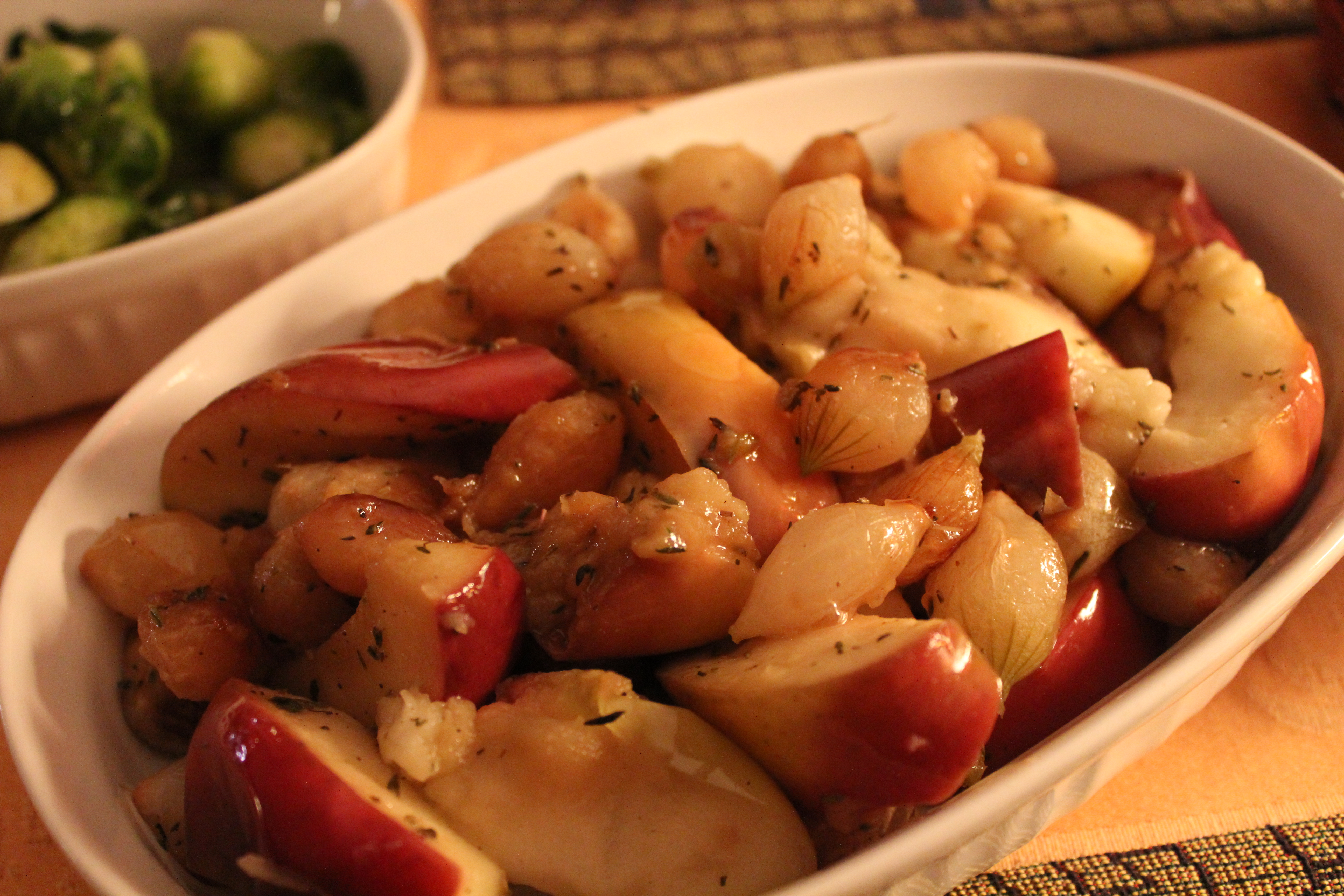
Roasted Apples and Onions

Pork Chops with Roasted Apples and onions, served with baked sweet potato and Brussels sprouts.

SOURCE:   Cooking Light, September, 2012

Thai-style Chicken Squash Stir Fry

Thai-Style Chicken and Squash Stir-Fry

With the weather still being relatively warm I wanted to prepare something light yet still take advantage of some fall vegetables, so I made up a stir-fry that incorporates butternut squash. The original recipe for this dish called for snow peas and carrots, but I substituted the butternut squash instead. It incorporates the robust flavors of Thai cuisine.  The ingredient list looks long, but if you get all of the ingredients prepped and organized before proceeding, the cooking itself is quick.  Serve it with steamed rice, fried rice, or to save on carbohydrates, wrap it in lettuce leaves.

THAI-STYLE CHICKEN, BUTTERNUT SQUASH, AND ONION STIR-FRY

YIELD:   6 servings

INGREDIENTS

  • 1 pound boneless, skinless chicken breasts, trimmed and thinly sliced

    Prep all the ingredients first.

  • 1/4 cup soy sauce
  • 1/4 cup mirin, rice wine, or dry sherry
  • 1/4 cup water
  •  2 Tablespoons plus 1 teaspoon cornstarch, divided
  • 2 Tablespoons toasted sesame oil
  • 3 Tablespoons fish sauce
  • 1/4 cup low-sodium chicken broth
  • 1 Tablespoon fresh lime juice
  • 1 Tablespoon sugar
  • 2 teaspoons freshly ground black pepper
  • 4 teaspoons vegetable or peanut oil, divided
  • 1 small butternut squash ( about 1 pound), peeled, seeded, and cut into 1/2-inch cubes
  • 1 onion, cut into thick wedges
  • 4 medium sized garlic cloves, minced
  • 2 teaspoons minced fresh ginger
  • 1/2 cup finely chopped fresh mint or cilantro
  • 1/3 cup crushed unsalted peanuts (optional)

DIRECTIONS

1.  Wrap chicken breast pieces in plastic and gently pound them very thin.

2.  In a medium bowl, whisk together soy sauce, mirin, and water; add chicken, toss to combine, and chill 15 minutes.

3.  In another medium bowl, whisk together 2 Tablespoons cornstarch and sesame oil, set aside.

4.  In a small bowl, whisk together fish sauce, broth, lime juice, sugar, pepper, and 1 teaspoon cornstarch; set aside.

5.  Drain chicken, pat dry, and toss with cornstarch-sesame mixture until thoroughly coated.  Heat 2 teaspoons vegetable oil in a large non-stick fry pan or wok over high heat until just smoking.

Add chicken, using tongs to separate and spread pieces out, and cook, stirring, until both sides are well browned and interior is almost cooked through, 2-3 minutes.  Transfer to a large bowl.

6.  In now empty pan, heat remaining 2 teaspoons oil until smoking and cook butternut squash, stirring occasionally, until just tender and browned on the edges, about 6 minutes; transfer to bowl with chicken.

Add onion wedges to pan and cook, without moving, until nicely charred on one side, about 1 minute; continue cooking for an additional minute, stirring frequently.

Push onions to the outside edge of the pan; in the center, add garlic and ginger and cook, stirring until fragrant, about 30 seconds.

Putting it all together.

7.  Move onions back to center of pan, add reserved chicken and squash, and stir in fish-sauce mixture.  Cook, stirring frequently, until sauce thickens, about 2 minutes.

Transfer to serving dish, garnish with herbs and crushed peanuts ( if using) and serve immediately .

SOURCE:  Adapted from a recipe in Cooking Light

Crab Imperial

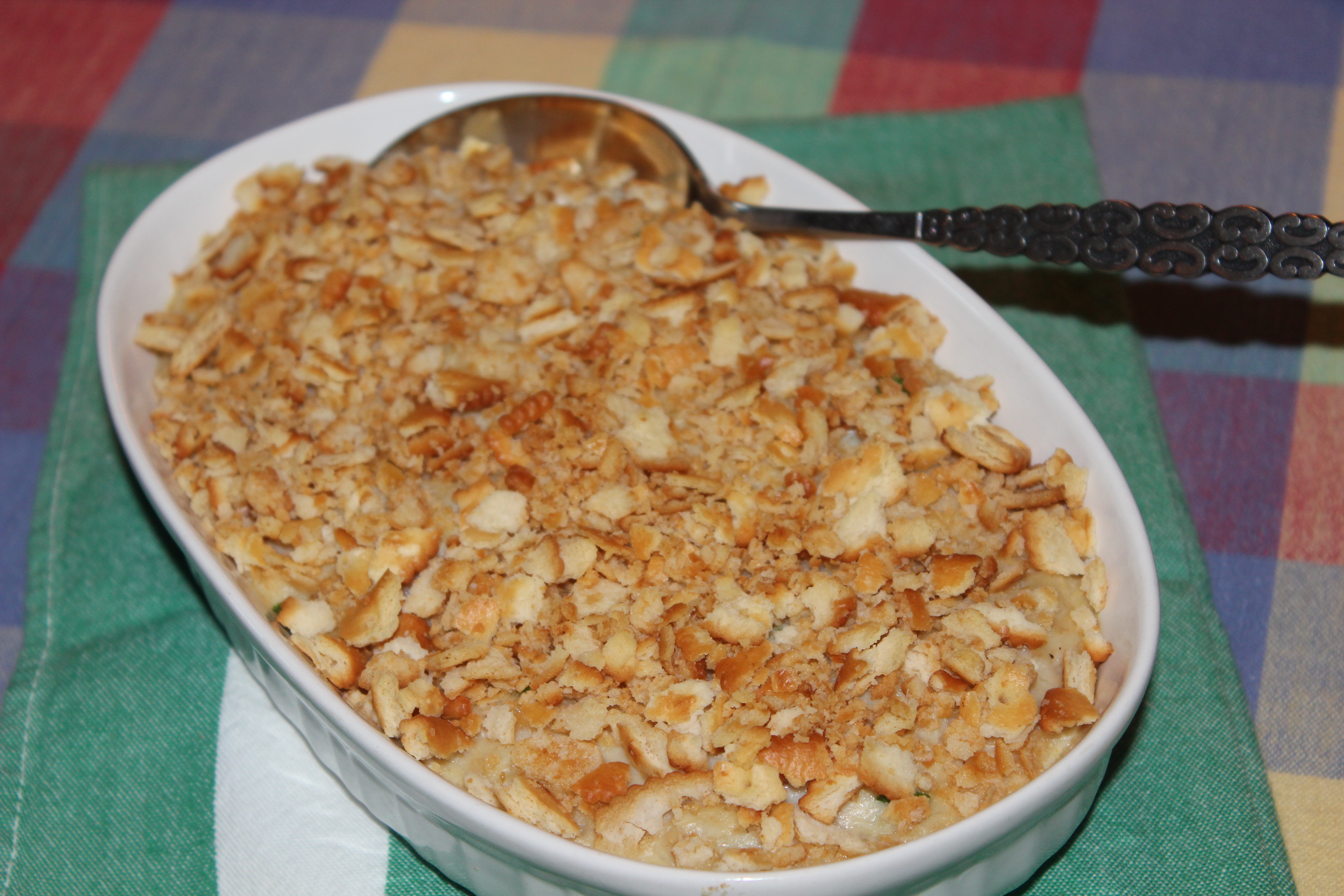
Crab Imperial

With the remains of the crabmeat my husband brought home  I made this dish.  In a sense it was an experiment because  I had not made it before, but I had all the ingredients on hand so I gave it a try.

Before I get to the recipe I thought I would share with you some facts about crabmeat.  Fresh crab meat will keep in your refrigerator for about 3 days, but  crabmeat which has been pasteurized will keep for several months in the refrigerator.  One pound of crabmeat equals 3 cups.  Crabmeat is packaged as follows:

  • Backfin, or Lump:  Solid lumps of white meat from the body muscles of the crab—the best!  It contains very little shell or cartilage, and is preferable in special recipes such as Crab Imperial or Crabmeat Salad.
  • Regular:  Small pieces of savory white meat from the body.  Still considered excellent, but takes more picking over for cartilage and shell removal.  Great for crab cakes, casseroles, salad, dips, etc.
  • Special:  A mixture of backfin and regular; also fine for dishes listed above.
  • Claws:  Meat from claws has a brownish tint, and comes in thin pieces.  It’s mostly used where appearance isn’t important.

The crabmeat that I had came from two large crab legs, part of which I had already used for the crab cakes, and what was left weighed about half pound, so I made only half of the following recipe.  The full recipe makes 4-5 servings.

CRAB IMPERIAL

SERVINGS:  4-5

INGREDIENTS

  • 1 egg
  • 1/4 cup mayonnaise
  • 1 teaspoon Worchestershire sauce
  • 3 dashes Tabasco sauce
  • 1/2 teaspoon salt
  • 1/4 teaspoon thyme
  • 1/2 teaspoon dry mustard
  • 3 Tablespoons parsley, chopped
  • 1 pound crabmeat, backfin or lump preferred
  • 2 Tablespoons butter, melted
  • 10-15 Ritz crackers, crushed

DIRECTIONS

1.  Preheat oven to 375 degrees. Grease a shallow baking dish or individual shell dishes.

2.  Remove any shell or cartilage  from crab meat.  Mix together all ingredients except crabmeat.  Gently stir in crabmeat.

3.  Put mixture in prepared baking dish(es).  Mix crushed crackers with the melted butter, then sprinkle on top of crab mixture.   Bake for 15-20  minutes.

My Evaluation:

Although we both liked the dish as prepared and presented here, I think if I make it again I would modify it in the following ways:  Add a few bay scallops and shrimp to the mixture for some variety in texture. Because the crab I used came from the legs, the pieces were small, and therefore there wasn’t enough “chew” factor.  The overall color of the dish was rather bland, so I would add some chopped green onion, maybe some roasted red pepper for color. Lastly I think it would be more enticing if it were served in a small pastry shell like phyllo cups.  These are just a few thoughts “in hind-sight” for anyone who decides to make it.  If you make it and have some good ideas to improve upon the recipe I would be interested to hear about it.

Crab Imperial

SOURCE:   Savory Shellfish Recipes of the Shore

Stuffed Cubanelle Peppers, Italian Style

Stuffed Cubanelle Peppers and Rigatoni

One day about a year or so ago I was watching Lidia’s Kitchen on Public Television, and on that day she made several dishes all featuring cubanelle peppers.  One of those dishes was the stuffed peppers I have for you here.  Although I did not take notes as I watched I remembered basically what she did.  I must point out that this is my adaptation of her recipe since I did not get exact amounts of ingredients.  Given the fact that these peppers are readily available at this time of year, I tend to make this when they are abundant.

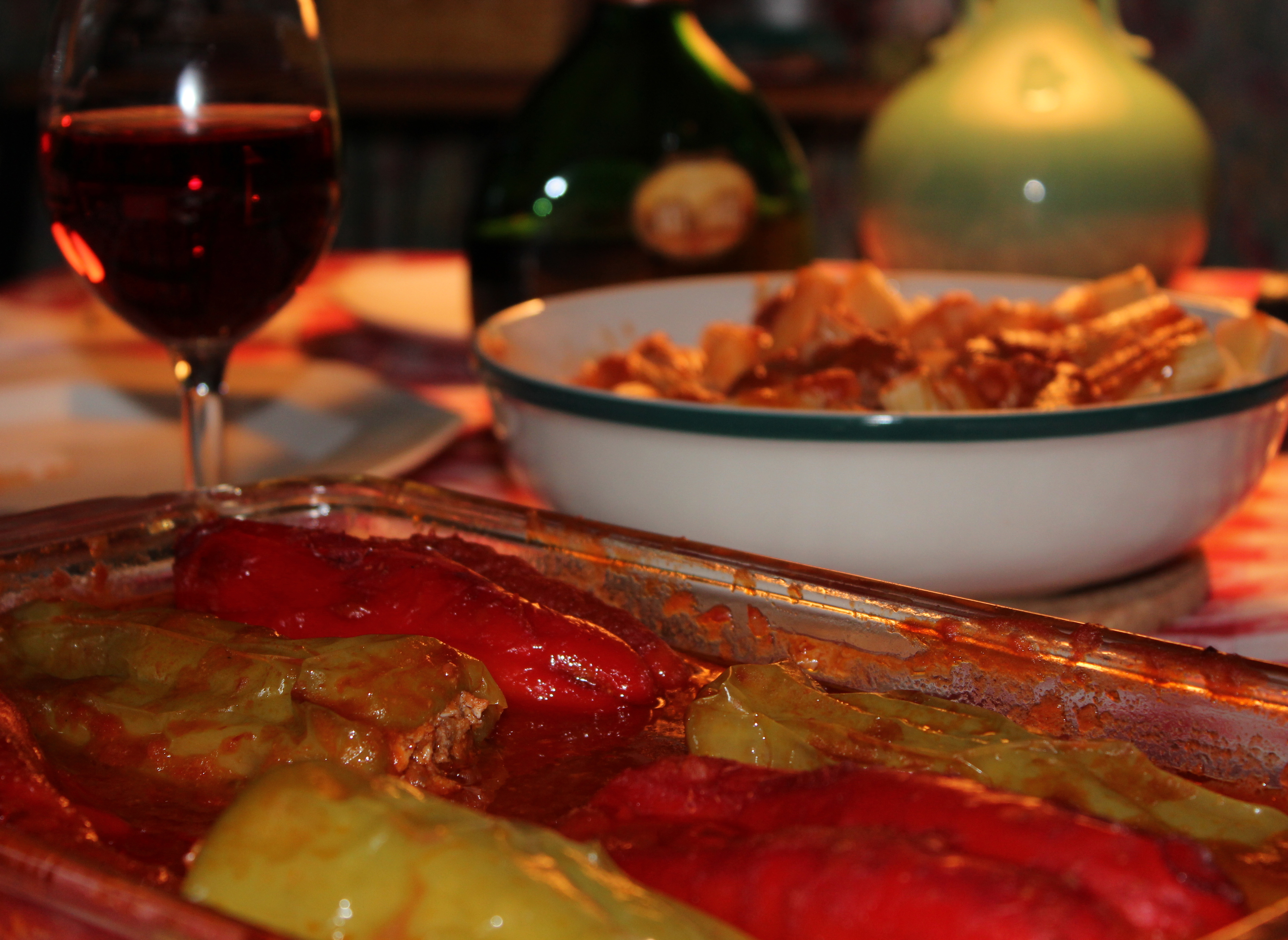
Cubanelle peppers, also known as Italian frying peppers, are not what you usually think of when you want to make stuffed peppers.  Usually the bell pepper is what comes to mind.  In a previous post I presented my recipe for Homestyle Stuffed Peppers, using bell peppers,and promised then that I would tell you of my other recipe for stuffed peppers.  So this is it.  I like these particularly well because the skins are very thin, and the flesh surprisingly meaty.;  they also bake in their sauce in about 90 minutes. I like to serve them with a pasta; one shaped to hold the sauce well.  In this case I used a ribbed rigatoni.  A tossed salad completed the meal.  Oh, yes, a glass of red wine, too.

INGREDIENTS 

SERVINGS:   6

INGREDIENTS

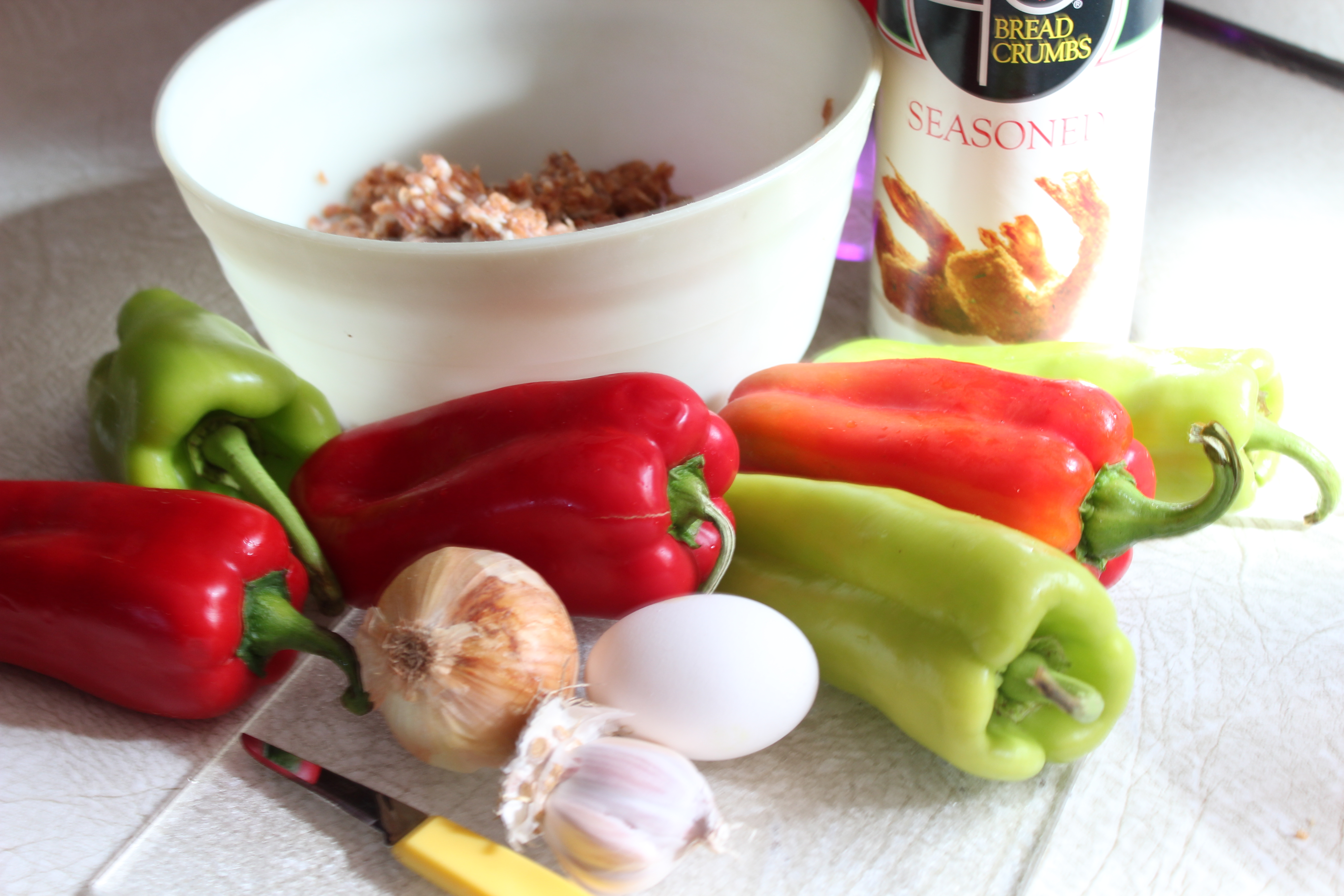
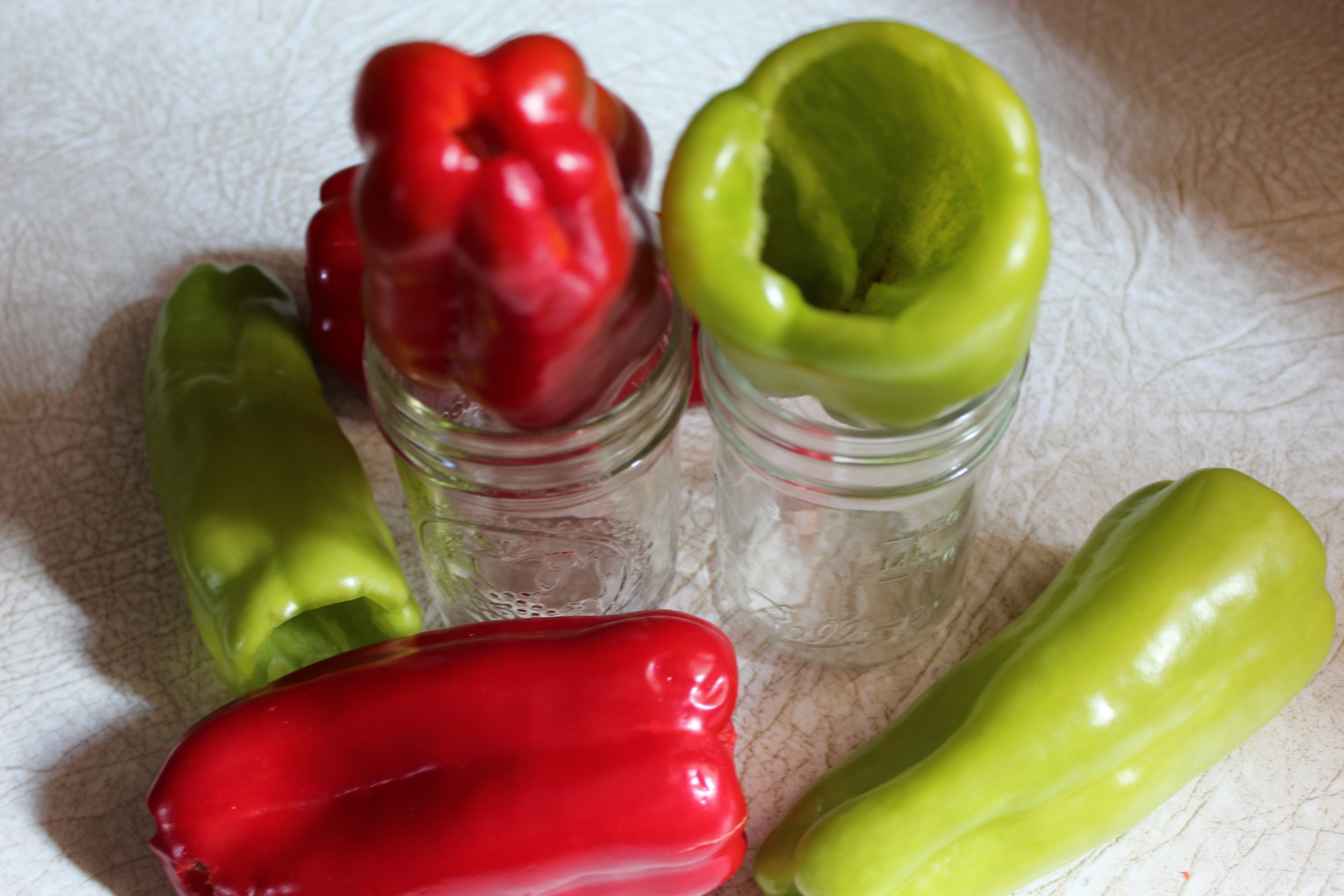
  • 6 nicely shaped cubanelle peppers, seeds and ribs removed (do not choose peppers that are bent and gnarly )
  • 1 pound bulk Italian sausage, mild, or hot;  your preference
  • 1/2 pound ground beef
  • 1 egg
  • 1 small onion, finely diced
  • 1 clove garlic, finely diced
  • 1/4 cup seasoned fine bread crumbs
  • salt and pepper
  • 1 large jar prepared spaghetti sauce or home made marinara sauce

DIRECTIONS

Preheat oven to 350 degrees.

1.  Prepare the peppers:  cut off tops, remove bulk of seeds and carefully remove the ribs with your fingers, taking care not to crack or break the pepper.  In the bottom of each pepper, cut a small hole.  This lets the meat juices escape and the sauce to enter.

2.  Prepare the meat filling:  In a large bowl, combine the sausage, ground beef, egg,bread crumbs, minced onion and garlic.  Sprinkle with salt and pepper to taste.

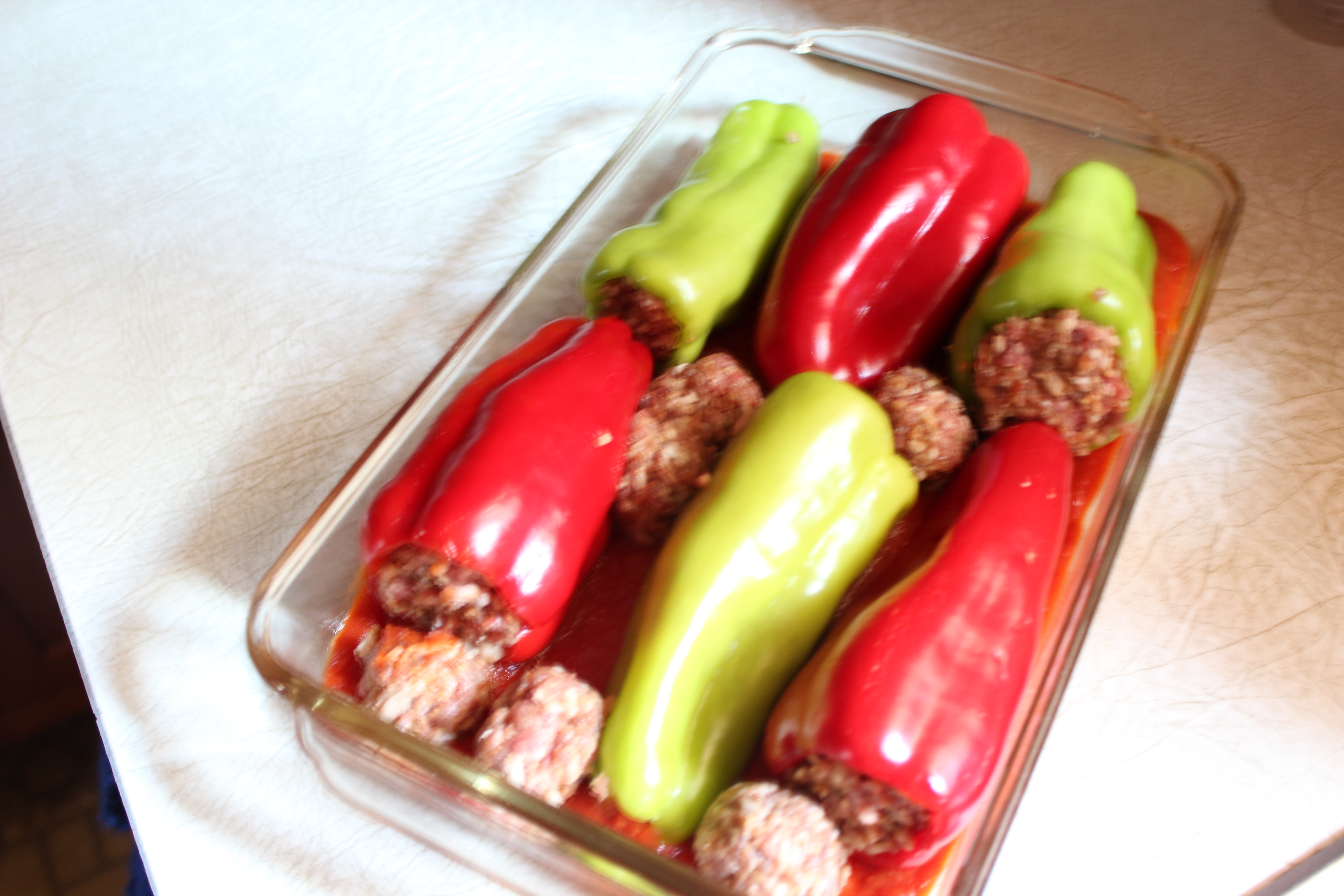
3.  Using a tablespoon, put meat filling into the peppers, pushing down gently with the spoon or tapping the pepper gently on the counter .  Take care not to pack the meat too tightly.  It needs room to expand so the filling will be  tender.  If you have meat filling left over after stuffing the peppers, form it into small meat balls.  These can be tucked in around the peppers.

4.  Spray a baking dish with non-stick spray; one that is large enough to hold the peppers and the sauce.  Pour enough sauce in the dish to cover the bottom.  Lay the stuffed peppers on the sauce (and any meatballs).


Pour the remaining sauce over all.

5.  Cover with foil and bake at 350 degrees for 1 hour and 1/2.

The smell of these cooking is so wonderful it will make you hungry.  In the last half hour of cooking time, boil water and cook pasta.

Serve with the sauce spooned over the pasta with grated Parmesano-Reggiano cheese on top.

SOURCE:   adapted from a recipe by Lidia Bastianich

Zucchini Crab Cakes

Zucchini Crab Cakes

I was introduced to crab cakes on my first trip to the Chesapeake Bay area, and I have loved them ever since.  The trouble is I don’t find fresh crab meat very often in my local market and even though crab cakes can be made with canned crab meat I prefer fresh—the pieces of crab are bigger.

I asked my husband to stop at a shoreline fish market to purchase some lobster one day after work, and he did;  but he also brought home two large crab legs with the request that I make crab cakes.    I promised him I would if he would crack them and extract the meat.  HA! (The cook has to protect her hands.)

OK, now the search begins.  What recipe should I use?  Things I considered in the search:  we don’t like red or green pepper in our crab cakes, so eliminate any recipes with those in it. The mixture is flaky and hard to hold together, so I wanted something with moisture to help bind it together.  Yeah, eggs do that, but wait, here’s one that uses zucchini as part of the mixture. Wow, moisture, binding power, and a vegetable to take the place of peppers.  This is it!  Usually I can read a recipe and know if it will work and taste good.  My instincts didn’t fail me on this one.

ZUCCHINI CRAB CAKES

SERVINGS:   makes 8 crab cakes.

INGREDIENTS

  • 2-3 teaspoons cooking oil
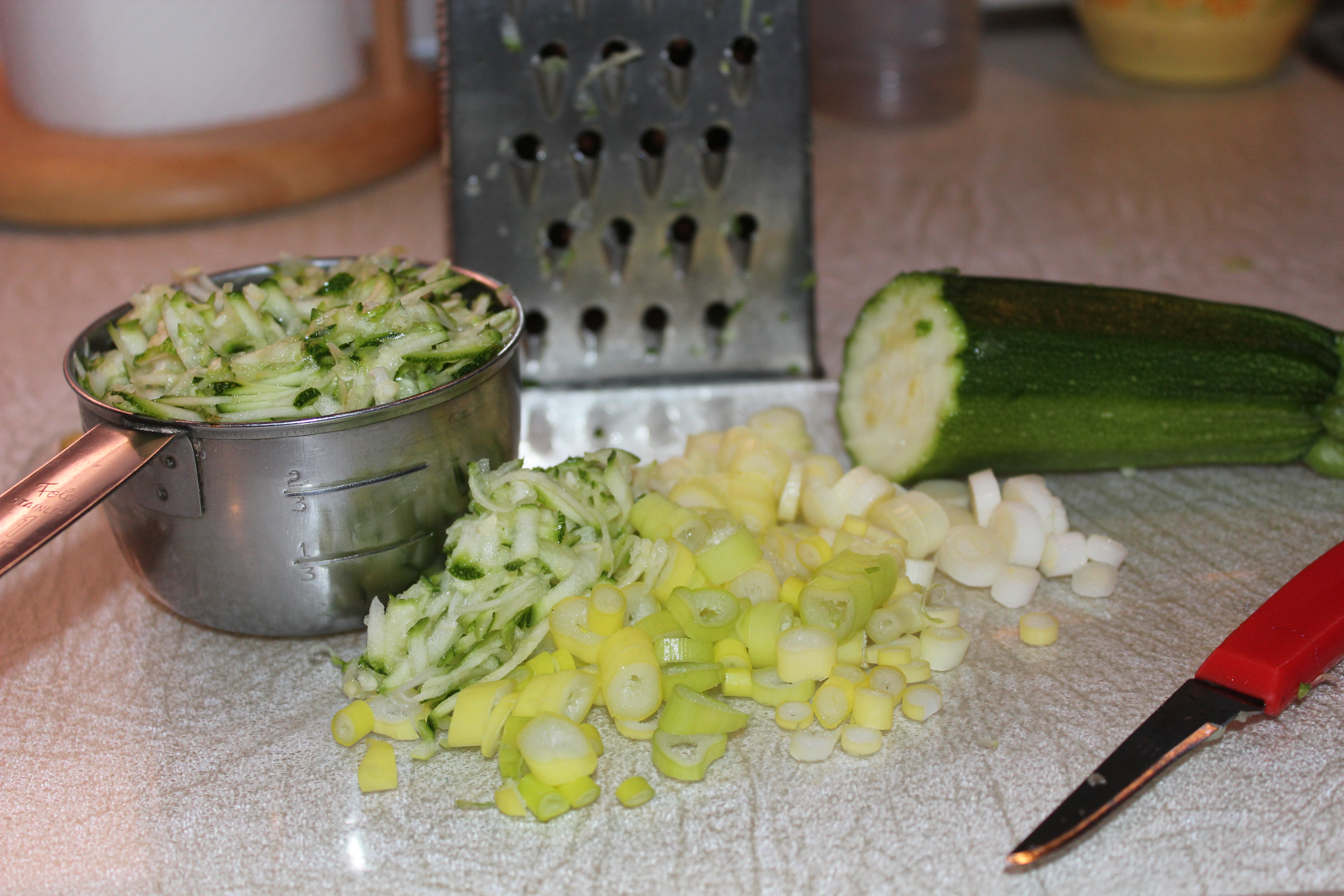
  • 1 cup coarsely shredded zucchini
  • 1/4 cup thinly sliced green onions
  • 1 egg beaten
  • 1/2 cup seasoned fine dry bread crumbs
  • 1 Tablespoon Dijon-style mustard
  • 1/2 teaspoon dried thyme
  • 1/4 -1/8 teaspoon ground red pepper (optional)
  • 8 ounces fresh cooked crabmeat (about 1 1/2 cups)  Purchase about 1 1/4 pounds crab legs to get 8 ounces of meat. Canned crab meat works, too.
  • cooking spray

DIRECTIONS

1.  In a large skillet heat 2 teaspoons cooking oil.  Cook and stir the zucchini and green onions about 3 minutes or until tender and the liquid is evaporated.  Cool slightly.

2.  In a large mixing bowl combine the beaten egg, bread crumbs, mustard, thyme, and, if desired, the red pepper.  Add the zucchini mixture and crabmeat; mix well.

3.  Using a 1/4 cup measure for each crab cake, scoop out and shape into 8 patties about 1/2 inch thick.  Spray each patty with cooking spray.

4.  Using the large skillet previously used lightly spray it with cooking spray, and reheat it.  Place the crab cakes sprayed side down in the pan, and cook for about 3 minutes.  Spray the uncooked sides and turn over.  Cook another 2-3 minutes till nicely browned and crisp.

These were really good.  I served them with another vegetable (broccoli ) and a salad consisting of roast golden beets, yellow cherry tomatoes, and baby greens with feta cheese.

SOURCE:   Savory Shellfish Recipes of the Shore

Pan-Seared Shrimp with Saffron Tomato Sauce

You’ve probably heard that saffron  is the most expensive spice on the planet.  Don’t be put off by that fact and neglect looking at some very interesting recipes.  Because saffron’s flavor is so strong, in most instances you only need a little.  Saffron is the signature flavor in such seafood dishes as bouillabaisse and paella and also in this dish that features shrimp in a tomato broth served over rice.  It is also the spice of choice when making risotto in the Northern provinces of Italy.

Saffron threads are actually the stigma of a particular variety of crocus.  Each flower bears only 3 of these stigma,which have to be carefully harvested by hand.  Somewhere around 50,000 flowers are needed to produce a single pound of saffron.  After harvest, the threads are delicately roasted over carefully tended wood fires.

When buying saffron look for a bright red-orange color and threads that are slightly pliable.  These characteristics are a sign of freshness, as saffron tends to darken and become  brittle as it ages.  Saffron is usually sold in specialty stores or in ethnic neighborhood markets.  It is packaged in tiny envelopes, and as long as they remain sealed the saffron will stay fresh.  I buy mine at an Italian foods market  in the city closest to where I live.


PAN-SEARED SHRIMP WITH SAFFRON TOMATO SAUCE

SERVES    4

INGREDIENTS

  • 1 pound large shrimp, peeled and deveined (tails can be left on).
  • 3 Tablespoons EVOO, divided
  • 2 Tablespoons butter, divided
  • 2 medium shallots, finely chopped
  • 1/3 cup dry white wine
  • 1/4 cup chicken broth
  • pinch of saffron threads, crushed ( about 1/2 teaspoon )
  • 3 medium plum tomatoes, seeded and chopped
  • salt and pepper
  • 2 Tablespoons fresh parsley, chopped
  • cooked, short-grain rice for serving

PREPARATION

1.  Heat 2 Tablespoons of the olive oil and 1 Tablespoon butter in a large sauce pan over medium heat.  Add the shallots and sauté to light golden color, about 2-3 minutes, stirring occasionally.

2.  Stir in the wine and chicken broth.  Bring to a simmer, then add the saffron.  Simmer for 1 minute so it dissolves.  Add the tomatoes and season with salt and pepper.  Reduce heat to low.  Cover and simmer 12-15 minutes.  Remove from heat, add fresh parsley and  keep warm

3.  Do not wipe out the pan.  Increase heat to med-high and add the last Tablespoon of oil and butter.  Once hot add the shrimp in a single layer.  Season with salt and pepper.  Cook till brown on one side.  Turn over and cook till brown on 2nd side, and opaque throughout, 1 1/2 – 2 minutes longer.

4.  To serve:  in a large serving dish, make a bed of rice, top with the shrimp and sauce.

SOURCE:     My Gourmet Connection

.

When in Rome—

When in Rome, or anywhere in Italy, or a good Italian restaurant, do as they do, and eat Italian food. A well-known Italian restaurant in our area features this dish on their lunch-time menu throughout the summer months. I have had it there and loved it. It features a combination of eggplant, tomatoes and onions with fresh herbs served over penne pasta. A while back our local newspaper published this recipe for the dish, and I was so delighted that now I could prepare it at home. I hope you enjoy this dish as much as we do.

Use the freshest eggplant and plum tomatoes you can find. Also lots of fresh basil or marjoram is key to the delicious blend of flavors. Serve with grated Romano cheese and crusty Italian Bread for a true restaurant-quality meal.

Roast Eggplant and Tomatoes with Penne Pasta

INGREDIENTS:

SERVES 4-6

  • 1 large eggplant, about 1 1/2 pounds, peeled and cut into 1 inch cubes
  • 1 Tablespoon salt, plus more to sprinkle on the eggplant
  • 1/4 cup olive oil
  • 2 pounds plum tomatoes, seeded and coarsely chopped
  • 1 large onion, cut vertically in wedges
  • 2 cloves garlic, minced
  • 2 Tablespoons fresh marjoram, oregano or basil chopped
  • 1 pound dry penne pasta
  • 2 Tablespoons fresh parsley, chopped
  • 2 Tablespoons extra virgin olive oil
  • Freshly grated Romano cheese

1. Place cubed eggplant in a colander and sprinkle lightly with salt. Toss. Allow eggplant to drain at least 30 minutes. Rinse, and pat dry with paper towels.

2. Preheat oven to 425 degrees. Spray a large roasting pan with non-stick spray. Put the eggplant, tomatoes, onion, garlic and herbs in the roasting pan. Pour the 1/4 cup oil over all and stir well to coat vegetables with oil. Add salt and pepper to taste. Spread out into an even layer.

3. On the top rack in the oven, roast, stirring occasionally , until eggplant and onions are lightly browned, 25-35 minutes.

4. Meanwhile in large kettle, bring water to boil and cook penne to al dente (7 – 10 minutes). Drain. Immediately add to the roasting pan with the vegetables. Add chopped parsley and EVOO . Toss well. Transfer to a large serving dish. Serve with grated Romano cheese.

When I made this dish just recently, I omitted the pasta and in its place I added some meatballs I had in my freezer.  I browned them in a skillet on the stove top, then placed them on top of the vegetables to finish cooking in the oven. I served the whole thing with a green salad consisting of baby greens, cucumbers and green grapes; and also a small ear of fresh corn. (Still keeping a low profile with those carbs!)

SOURCE: Courtesy of Max A Mia restaurant.

Sirloin Tips with Butter Sauce


There are times when I want to prepare a tender cut of beef,  but using our gas grille is not feasible (it’s raining outside, or too cold); or I do not want to use the oven or broiler ( it’s too hot to turn on the oven).  That’s when I turn to this recipe.   You can prepare a very delicious steak, or any other tender cut of beef very quickly.   I particularly like sirloin tips, but I’ve made it with Hanger steak, and with a sirloin steak, and they have all been wonderful.  This requires only  a few ingredients.

In addition to the meat of your choice, have ready:

  • 1 large or 2 small shallots, chopped fine
  • 2 tablespoons cold butter
  • salt and pepper
  • 2 teaspoons fresh lemon juice
  • 1 tablespoon chopped parsley

Preheat a large fry pan to very hot.  Do not spray or oil the pan.  A hot pan is required to quickly sear the surface of the meat and seal in the juices.  Add the steak to the dry pan, and cook 4-5 minutes/side.  Turn once only. Cooking time is dependent on your preference for rare, versus more will-done.

Remove meat from pan to a platter.  Season with salt and pepper, and cover with foil to keep warm.

Into the hot pan add chopped shallots, and the butter.  Saute, and scrape up browned bits.  Add the lemon juice, chopped parsley, and any juices which have drained from the hot steak.  Warm through, pour over steak, and serve.

SOURCE:  Cook’s Illustrated